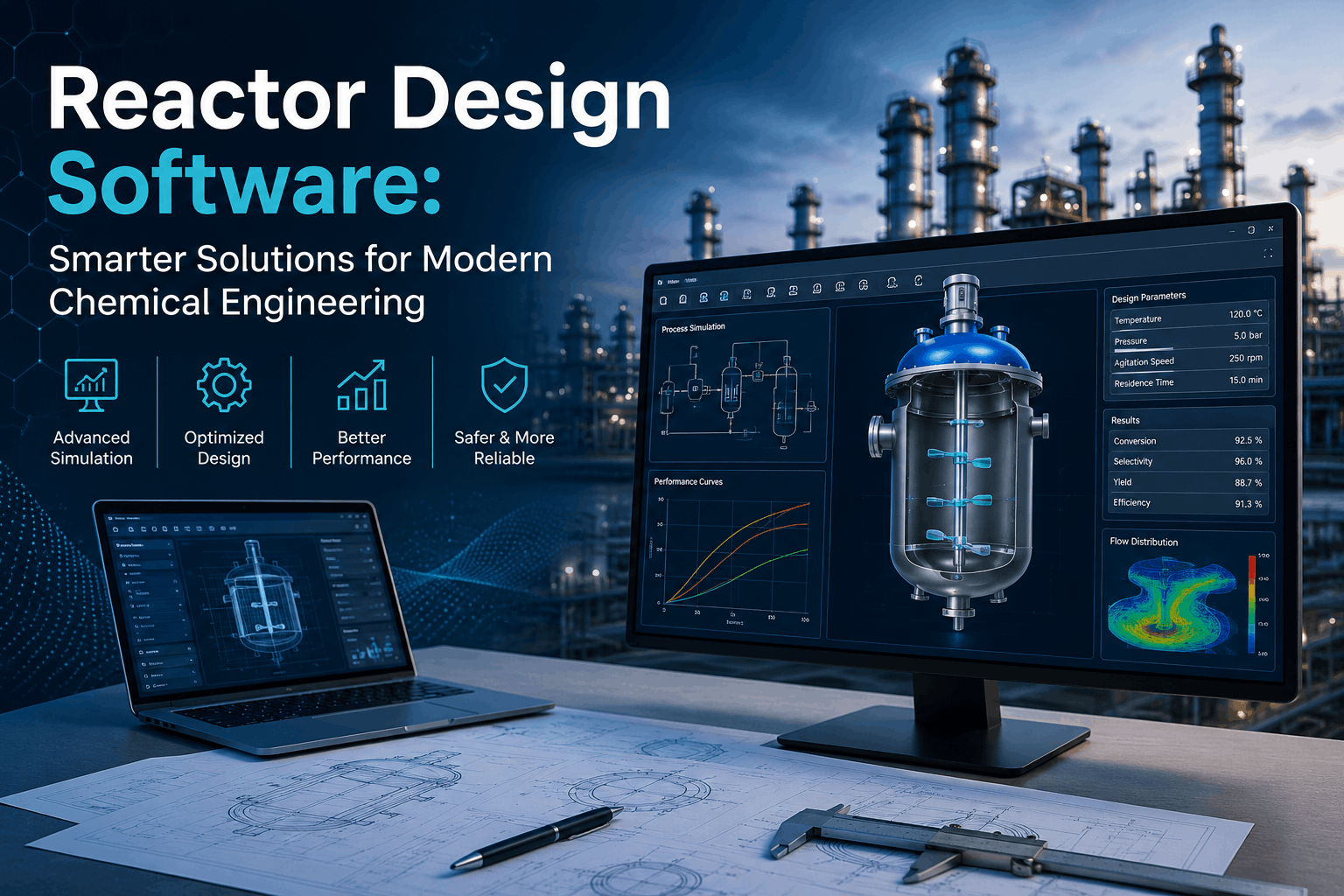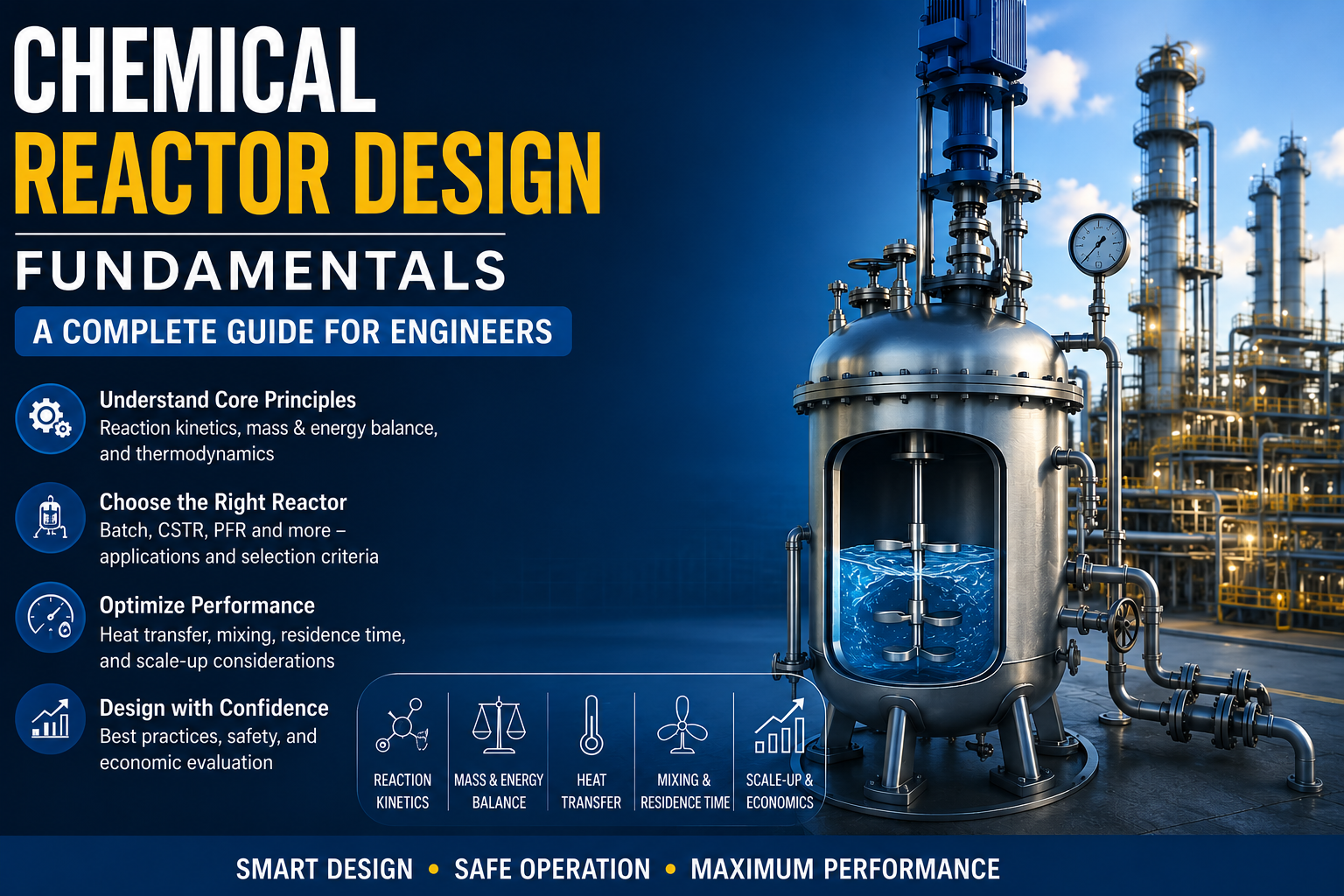
Chemical engineering has undergone a great deal of change during the past 20 years. Chemical engineers are now able to utilize computer programs and other forms of technology to assist them with designing complicated chemical processes. As opposed to relying solely on manual calculations and spreadsheets, chemical engineers can use these new technologies to conduct analyses, simulations and optimizations of their equipment prior to actually building the process.
Among these tools, reactor design software plays a particularly important role because reactors are often considered the heart of a chemical process plant. Whether you’re producing fertilizers, polymers, pharmaceuticals, petrochemicals, or specialty chemicals, the performance of the reactor directly affects product quality, operating costs, energy consumption, and plant safety.
This article explains what reactor design software is, how it works, and why it has become an essential tool for modern chemical engineers.
What Is Reactor Design Software?
Reactor Design Software is a specific engineering software that allows users to perform modeling and simulation of chemical reactions within a reactor. With this software, engineers are able to determine the behavior of a reactor at various operating conditions without having to manually calculate each condition.
Engineers are able to determine reactor behavior based upon reaction kinetic data, mass balance equations, energy balance equations, thermodynamic data, and process parameters.
To put it simply, Reactor Design Software answers these questions:
What is the required reactor volume?
What amount of conversion will occur?
How does temperature impact the reaction?
What residence time is necessary?
How much heat must be applied or removed?
Will the process be safe under normal operating conditions?
By answering these questions using Reactor Design Software, engineers are able to make educated decisions regarding their design prior to building a plant or making modifications.
Why Is Reactor Design So Important?
A chemical reactor is the location within a process where the chemical reaction occurs.
Errors made during the design phase of a reactor may cause:
Yield loss,
Excessive energy usage,
Poor product quality,
Increased operational expense,
Potential for safety hazards,
Bottlenecks in production.
Companies are willing to spend considerable amounts of money and time designing their reactors and optimizing them due to the fact that they will directly affect both company profits and efficiency. This is why Modern Reactor Design Software provides such great value.
How Reactor Design Software Helps Chemical Engineers
Faster Engineering Calculations
Traditional reactor designs are typically created using multiple differential equations and manual iterative computations.
Computer software simplifies this process by automating the calculations and producing results in a fraction of the time that it would take to do them manually.
Process Simulation Before Implementation
An advantage to using reactor design software is that it allows engineers to try out various operating conditions in a virtual environment.
In a virtual environment, engineers can try out:
• Different operating temperatures
• Different feed compositions
• Different flow rates
• Different catalyst performances
• Pressure changes without having to interrupt normal plant operations.
This minimizes risk and enables engineers to determine what the most efficient operating conditions will be.
Better Process Optimization
Modern chemical plants are constantly looking for ways to improve their productivity and energy efficiency.
Engineers use reactor design software to optimize:
Reactor size. Conversion rates. Product selectivity. Energy consumption. Production capacity.
Small improvements can result in significant annual cost savings.
Improved Plant Safety
Many chemical reactions produce heat and pressure. In order for the engineers to keep the plant safe, they must be able to control both of these variables. When engineers do not have control over either one of these variables, it can lead to dangerous conditions.
Engineers can use simulation software to model how the reactor will operate under various conditions. Using this information, engineers can find out if there are any problems with the operation of the reactor.
Some examples of problems that may arise from improper design or operation include:
Too much heat being generated in the reactor.
Uncontrolled reaction rates.
Too much pressure building up in the reactor.
Not enough cooling capacity available for the reactor.
Using simulation software to determine what problems could possibly occur, allows engineers to design better processes and make them safer.
Easier Scale-Up
An industrial reaction that operates successfully on the lab bench may not operate at all when scaled up to a commercial reactor.
Reactor design software provides engineers with tools to estimate how a reaction will perform under commercial conditions using laboratory data, thereby minimizing the risks of scaling up a new process..
Types of Reactors Commonly Designed Using Software
Today’s reactor design software supports many different types of reactor configurations, including:
Batch Reactors
Batch reactors (common in the pharmaceutical and specialty chemical industries)
Continuous Stirred Tank Reactors (CSTR)
Continuous stirred tank reactors (used for liquid phase reactions that require continuous mixing and operation)
Plug Flow Reactors (PFR)
Frequently used in petrochemical and large-scale chemical production facilities.
Packed Bed Reactors
Used extensively for catalytic processes.
Catalytic Reactors
Designed for reactions involving catalysts where conversion and selectivity are critical.
A Practical Example
The engineer will need to calculate the volume of the reactor, the flow rate through it, the reaction rate constant, and at what temperature the reactor should operate. Manual calculation of all of these parameters can be very time-consuming. Using reactor design software, the engineer can evaluate many different options in terms of reactor size and operating conditions and select the one that has the lowest cost. The use of software helps the engineer save valuable time and increases his confidence in the final design.
Why Many Engineers Choose Difrex
At Difrex, we understand that engineers need practical tools that deliver accurate results without unnecessary complexity.
Our reactor design solutions help engineers:
- Design Batch Reactors, CSTRs, and PFRs
- Perform mass and energy balance calculations
- Analyze reaction kinetics
- Optimize reactor performance
- Generate engineering reports
- Reduce project design time
Whether you’re a process engineer, consultant, researcher, educator, or plant professional, Difrex provides tools that support smarter engineering decisions.
The Future of Reactor Design
The use of digital technology in reactor engineering has grown significantly.
With this new wave of modern software programs come many advancements including:
Digital twins
Machine learning
Artificial intelligence
Advanced optimization methods
Real-time process monitoring
This allows engineers to better model reactor behavior over time and make continuous improvements to how plants operate.
As industrial processes grow in complexity, the importance of simulation based design will grow as well.
Conclusion
Reactor design software is now an essential part of a chemical engineer’s toolbox. It helps to simplify manual calculations, improves safety, enables process simulation, and supports optimization efforts; therefore, it allows engineers to make more informed decisions throughout the entire life cycle of their projects. Organizations that want to improve the performance of their reactors, decrease engineering costs, and speed up the process development time will find reactor design software to be a necessity rather than a luxury.
Frequently Asked Questions
What is reactor design software?
Reactor design software is an engineering tool that can be used to simulate, model, and optimize chemical reactors for increased performance, safety, and efficiency.
Which reactors can be designed using reactor design software?
The majority of reactor design software will support batch reactors, continuous stirred tank reactors (CSTR), plug flow reactors (PFR), and catalytic reactor systems.
Why do chemical engineers use reactor simulation?
Simulation enables engineers to evaluate how a reactor will operate prior to being built; therefore, engineers are able to reduce risks associated with building new processes and optimize current processes.
Can reactor design software reduce project costs?
Yes. By minimizing trial-and-error testing and automating calculations, reactor design software can significantly reduce engineering time and development costs.
Is reactor design software useful for industrial scale-up?
Absolutely. It helps predict how laboratory-scale reactions will perform at commercial production levels, making scale-up projects more reliable.