Chemical reactors are like the heart of a manufacturing plant. No matter how complicated a manufacturing process may seem, its success depends on how well the chemical reaction occurs. This explains why chemical reactor design remains one of the most important fields of study in chemical engineering.
It is important to understand the basics of chemical reactor design whether you are designing a completely new chemical process, scaling-up laboratory-scale research to pilot-scale and/or production-scale manufacturing processes, or trying to improve the efficiency of an existing production process. Creating a chemical reactor that converts at least 90% of the reactants while keeping costs low and safety high will allow you to maximize your profits.
This report aims to give the reader an introduction to some of the essential principles that engineers should consider when designing a chemical reactor.
What Is Chemical Reactor Design?
Chemical reactor design is how we decide which kind of reactor (or reactors), what size, under what operating conditions, and how well it needs to work in order for us to get our desired chemical conversion.
We want to convert reactants to products as quickly, safely and cheaply as possible. To do this, however, we have to take many things into account. Some of these include:
Reaction rate (kinetic)
Heat transfer
Mass transfer
Flow patterns
Residence time
Catalyst efficiency
Cost of operation
Modern industries increasingly rely on simulation tools and Next-Gen Reactor Design approaches to handle these complex calculations more effectively.
Why Reactor Design Is Important
A poorly designed reactor creates several problems that include:
Poor product yields Poor selectivities High energy requirements Safety issues Higher cost of production Shorter equipment lifetime
In contrast, a properly designed reactor will help to optimize the operation of your facility and increase its overall profitability.
Reactor design has a major impact on an organization’s competitive edge.
The Fundamental Design Objectives
Every reactor design project focuses on several key objectives.
Achieve Desired Conversion
The reactor must convert reactants into products at the required level.
Higher conversion generally improves raw material utilization and profitability.
Maximize Product Selectivity
Many reactions generate unwanted by-products.
Good reactor design helps maximize desired products while minimizing side reactions.
Ensure Safe Operation
Safety is always a top priority.
Engineers must evaluate:
- Temperature rise
- Pressure buildup
- Reaction runaway risks
- Cooling requirements
Minimize Cost
The reactor should be able to meet the process goal at an economical cost as far as possible (both capital and operating). Finding this equilibrium between the two conflicting objectives of achieving high level performance while minimizing the economic cost is the distinguishing feature that separates a superior design from an inferior one in terms of Reactor Design Performance Guaranteed.
Understanding Reaction Kinetics
Reaction kinetics are studies that investigate the rate at which chemical reactions take place.
Engineers use this type of data when determining:
The required volume of a reactor The amount of product produced per unit of time The length of time reactants remain in a reactor How temperature impacts the reaction rate If there is no accurate kinetic data available for a particular reaction, then designing an appropriate reactor for that reaction is based on conjecture.
An example would be:
A rapid reaction would typically need a much smaller reactor
than a slow one to produce the same amount of product.
Therefore, reaction kinetics are almost always the initial step in creating a functional reactor.
Mass Balance Fundamentals
Engineers rely on mass balance calculations to begin the design of a reactor.
The idea behind mass balance is simple;
Input = Output + Accumulation + Consumption.
Mass balance calculations allow engineers to calculate:
Product yields Flow rate of materials Conversion efficiency Required size of reactors No matter what kind of reactor an engineer will be designing, they will use mass balance calculations as one of the first steps in their design.
Heat Transfer Considerations
Most chemical reactions either release or absorb heat.
Exothermic Reactions
These reactions generate heat.
Examples include:
- Oxidation reactions
- Polymerization processes
- Combustion systems
Without proper cooling, reactor temperatures can rise rapidly.
Endothermic Reactions
Most chemical reactions are endothermic (absorb) or exothermic (release) Heat.
Exothermic reactions produce heat.
Some examples of exothermic reactions include:
Oxidation reactions
Polymerization processes
Combustion systems
If there is no way to cool the reactor, the temperature within the reactor will increase very quickly.
Endothermic reactions require continuous heat input.
Some examples of endothermic reactions include:
Steam reforming
Cracking operations
If the reactor does not get enough heat, the production rate of the product will decrease, and so will the conversion rate of reactants to products. New Emerging Tech Reactor Design solutions are using more advanced computer simulations to model how the reactor will behave thermally prior to its physical construction..
Choosing the Right Reactor Type
One of the most important design decisions involves selecting the appropriate reactor configuration.
Batch Reactors
Best Suited For:
Specialty Chemical
Products Pharmaceutical
Applications Limited-volume
Production Applications Advantages:
Highly Flexible
Easy to Change Recipes
Continuous Stirred Tank Reactors (CSTR)
Best Suited For:
Uniform Mixing Requirements
Continuous Liquid-Phase Process
Requirements Advantages:
Consistent Operating Performance
Easy Temperature Control
Plug Flow Reactors (PFR)
Best suited for:
large scale production
high conversion applications
Advantages:
very efficient
less volume required
Selecting the correct reactor is often the responsibility of an experienced Reactor Design by Process Engineer team.
Residence Time and Conversion
Residence time refers to how long an average reactant will be in the reactor.
In general:
longer residence times = higher conversions
However, excessively long residence times can:
increase reactor size
lead to higher capital expenditures
promote unwanted side reactions
Therefore, finding the right residence time (optimal) is a primary goal when designing a reactor.
Scale-Up Challenges
One of the major problems faced by chemical engineers is transitioning their work from a lab-based experimental environment to an industrial one.
There are many differences between lab-scale experimental environments and industrial performance, such as; Heat transfer behaviors change Flow patterns become more complex Mixing characteristics change It is necessary to carefully examine and simulate the entire process of scaling up in order to successfully transition from the lab-scale experimental environment to an industrial one.
Therefore, Commercial Reactor Design expertise is particularly important when attempting to scale-up a process.
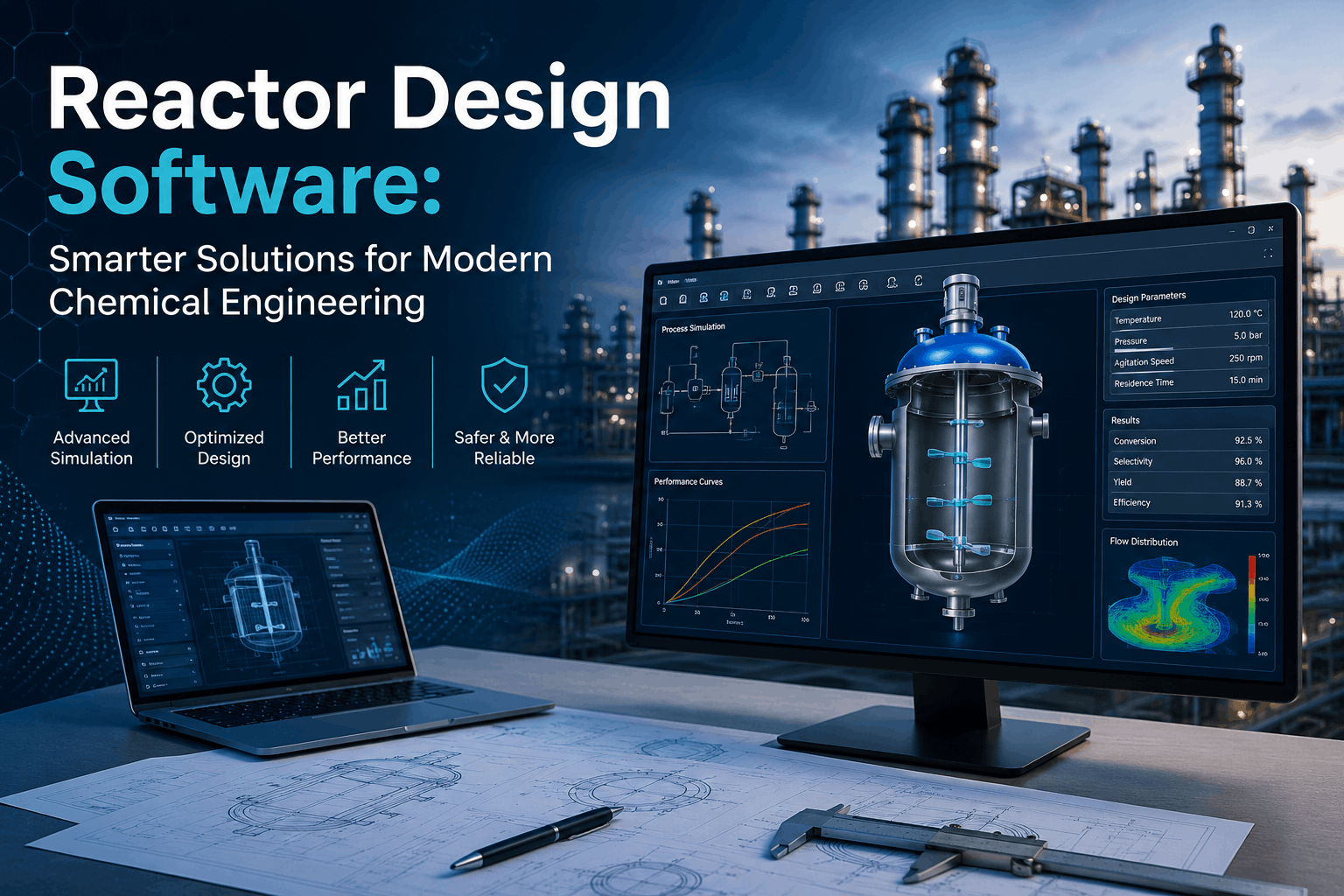
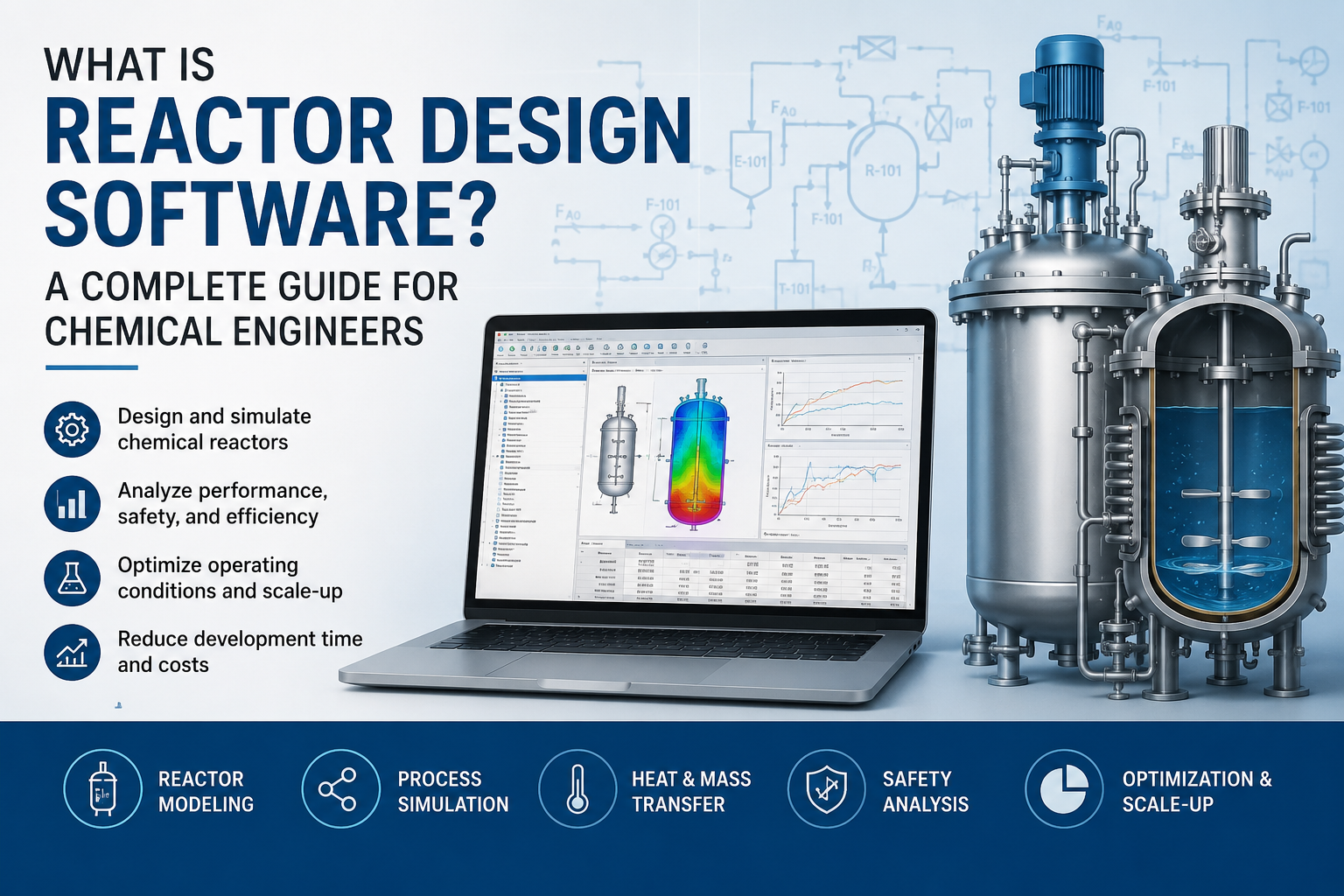
The Role of Modern Reactor Design Software
A few decades ago, most of the calculations that engineers did were either by hand or using spreadsheet applications.
Today, there are many advanced software tools available to engineers which allow them to;
Simulate how a reactor will operate under various conditions.
Perform comparative analysis of different scenarios.
Optimize reactor operating parameters for maximum efficiency.
Predict the amount of product produced from the reactants (conversion).
Calculate how much heat is transferred between the reactants and the reactor walls.
Create technical reports summarizing all aspects of their work.
With the development of modern simulation software, the design process for reactors has become significantly faster and more accurate.
In addition to this, many companies have adopted simulation-based design as an integral part of their everyday engineering practices instead of just an option.
How Difrex Supports Reactor Design
Difrex offers Chemical Engineering Tools to Assist Chemical Engineers with simplifying Reactor Design Calculations and Process Evaluation.
With the use of Difrex’s Products, Engineers are able to:
Study Reaction Kinetics
Develop Mass/Energy Balances
Determine Reactor Volumes
Compare Reactor Configurations
Evaluate/Optimize Process Performance
Produce Engineering Reports
The above mentioned Capabilities are supportive of both Academic Research and Industrial Process Development.
Future Trends in Reactor Design
Reactor Engineering’s Future is Increasingly Digitalized.
New technologies emerging today for designing and operating next generation reactors will be the basis of future reactor development.
New technologies being implemented in reactor engineering include:
• Artificial Intelligence
• Machine Learning
• Digital Twins
• Real-time Process Monitoring
• Advanced Process Optimization
These new technologies allow engineers to develop and implement smart and safe reactor system designs while improving overall reactor system efficiency.
Digital Engineering Practices continue to be adopted by many industries as a method of improving the quality of products and services. As such, it is likely that Next-Gen Reactor Design Methods will grow in importance..
Frequently Asked Questions
What is chemical reactor design?
Chemical reactor design is the process of determining the size, type, and operating conditions required to achieve a desired chemical conversion efficiently and safely.
Why is reactor design important?
Proper reactor design improves conversion, product quality, safety, and process profitability.
What factors affect reactor design?
Factors that will determine the type of reactor include kinetic rate of reaction, heat transfer rates, mass transfer rates, residence time of reactants in the reactor system, how much reactant needs to be converted and at what temperature and pressure the reaction is taking place.
Which reactor type is most efficient?
The answer to this question depends on the specific application. In general for first order reactions, plug flow reactors have a greater conversion efficiency than continuous stirred tank reactors (CSTRs).
How does software help reactor design?
Modern software allows engineers to simulate reactor performance, optimize operating conditions, and reduce design time while improving accuracy.