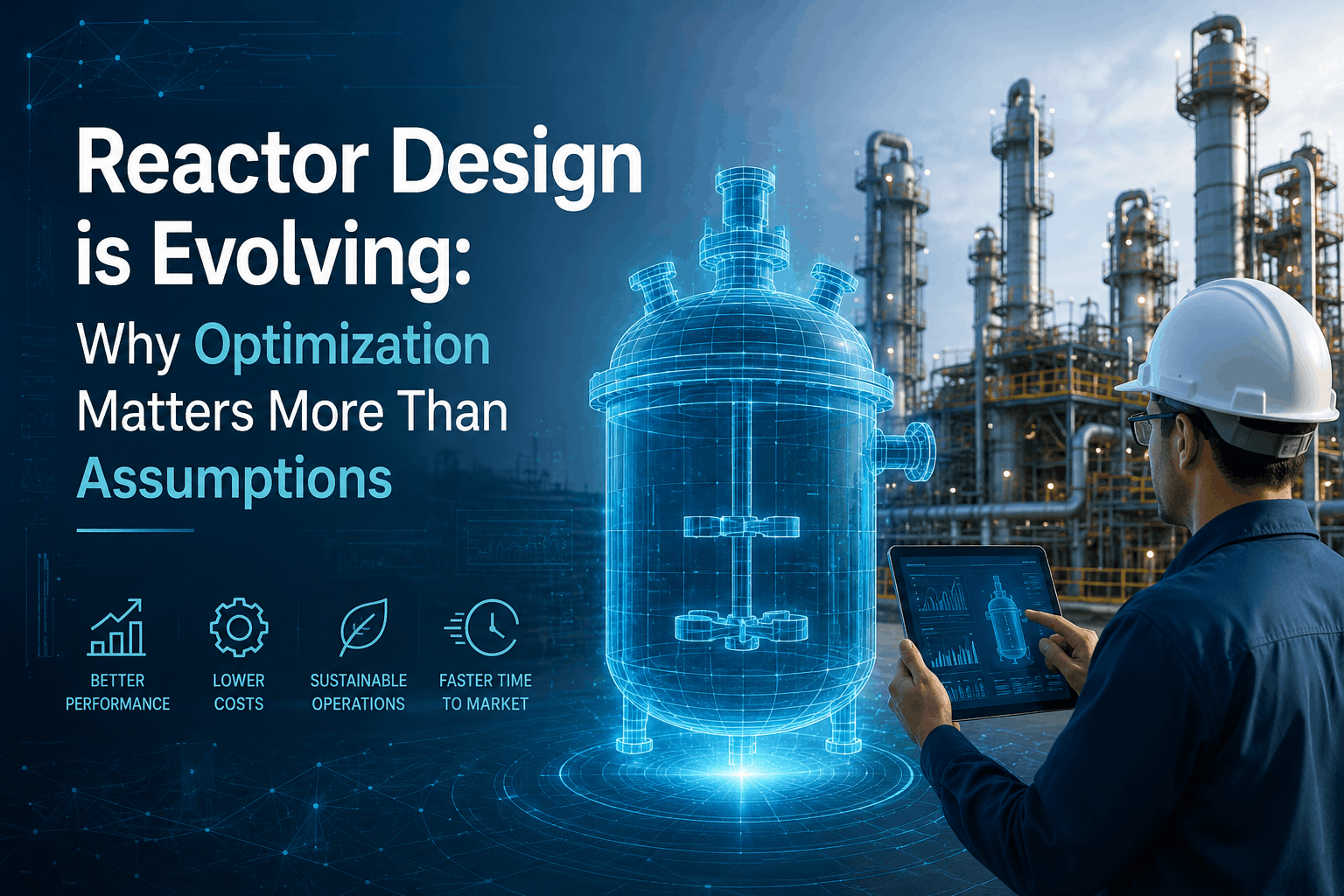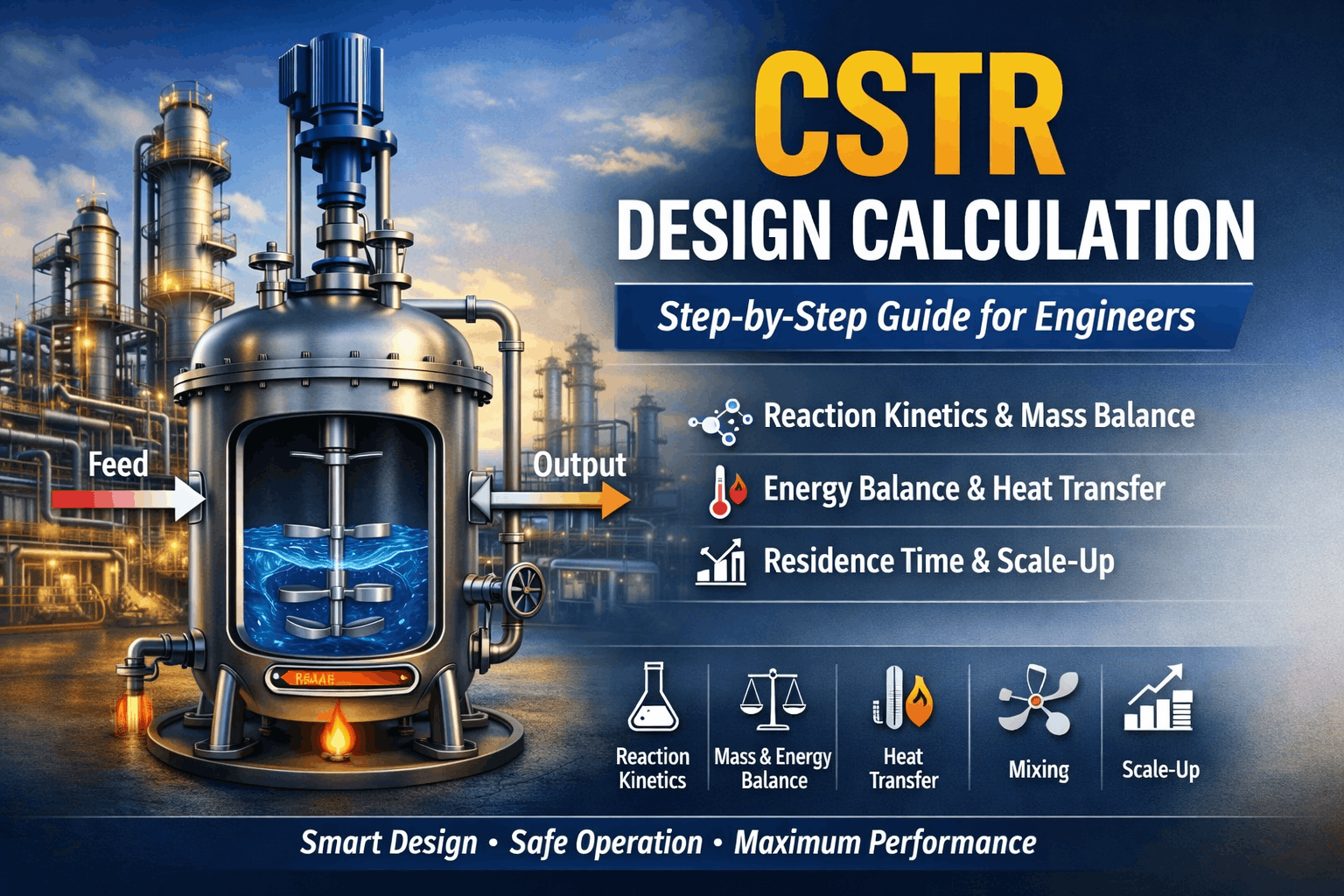
This guide explains the principles of fixed bed reactor design, the major engineering considerations, and best practices for achieving efficient and reliable reactor performance.
What Is a Fixed Bed Reactor?
A fixed bed reactor is a continuous reactor in which solid catalyst particles remain stationary inside the reactor while reactants flow through the catalyst bed. As the reactants pass over the catalyst surface, chemical reactions occur and the products exit the reactor.
Unlike fluidized bed reactors, the catalyst does not move during operation. This simple configuration provides excellent mechanical stability and makes fixed bed reactors ideal for continuous catalytic processes.
How Does a Fixed Bed Reactor Work?
The operation of a fixed bed reactor is as follows:
A fixed bed reactor has an entrance where feed enters.
The feed then flows over the catalyst bed.
Reactants flow from the fluid phase toward the catalyst surface
Chemical reactions take place on the catalyst.
Reaction products flow away from the catalyst surface.
Finally, reaction products flow out of the reactor.
Key Components of a Fixed Bed Reactor
An efficiently designed reactor will consist of multiple critical parts:
Reactor vessel
Catalyst bed
Feed distribution system
Product outlet
Support grids
Catalyst retaining screens
Temperature measurement points
Pressure monitoring instruments
Heat transfer system (if needed)
Each component helps ensure that the reactor operates safely and consistently.
Engineering Principles of Fixed Bed Reactor Design
Designing a fixed bed reactor requires balancing multiple engineering factors rather than optimizing a single variable.
1. Reaction Kinetics
Reaction kinetics is a study that examines how fast reactants are converted to products. A reaction kinetic model allows engineers to make estimations about the size of their reactor, the amount of catalyst required, the residence time in the reactor and the operating conditions.
To achieve maximum conversion while minimizing the size of your reactor you need to understand the rate at which reactions occur.
2. Catalyst Selection
Catalyst selection will significantly affect how well your reactor operates.
Engineers are concerned about many aspects of a catalyst including its
catalytic activity,
selectivity,
mechanical strength,
thermal stability,
resistance to poisoning,
expected length of service before regeneration is required.
3. Heat Transfer
The temperature of many catalytic processes will cause them to be either hot (exothermic) or cold (endothermic). Poor temperature control in a process can result in:
• A decline in the activity of your catalyst.
• A decrease in the amount of selective products you are producing.
• An increase in “hot spots,” where there are localized areas of extreme heat.
• An increase in “thermal runaways,” which occur when the rate of heat generation exceeds the rate of heat dissipation, leading to uncontrolled increases in reactor temperature.
• An increase in low-quality product..
4. Pressure Drop
Pressure drops occur when fluid moves across the catalyst bed due to the friction of moving fluid against the catalyst.
Excessive pressure drop has several negative impacts on the operation of a reactor including:
Increasing Operating Costs
Decreasing Reactor Efficiency
Limiting Production Capacity
Changing Flow Distribution
Catalyst particle size, bed height, fluid velocity, and reactor diameter are all factors that contribute to pressure drop.
5. Flow Distribution
A uniform flow ensures that every single particle of catalyst contributes to the reaction.
The lack of uniform distribution can lead to:
Channeling
Dead zones
Uneven catalyst utilization
Overheating of specific areas
Reduced conversion Proper design of an inlet distributor will improve the efficiency of the reactor.
Important Design Parameters
There are many factors that engineers consider in designing a fixed-bed reactor.
Some of these include;
the diameter of the reactor,
the height of the reactor,
how much catalyst is present,
what percentage of the bed will be porous (bed porosity),
the size of the particles in the bed,
the operating pressure,
the operating temperature,
the composition of the feedstock going into the reactor,
the flow rate of the feedstock,
the residence time of the feedstock within the reactor,
and finally the conversion target and product selectivity.
If you optimize all of these variables, you can make your process run more efficiently and at a lower cost.
Common Industrial Applications
The use of fixed bed reactors spans many different sectors of industry because they provide both flexibility and stability.
Some major uses of fixed bed reactors include;
Hydrogen production
Ammonia synthesis
Methanol production
Hydrodesulfurization
Steam reforming
Catalytic oxidation Fischer-Tropsch
Processes Carbon Capture Technology
Manufacturing Specialty Chemicals
Catalytic Environmental Systems
Continuous operation allows the fixed bed reactor to be used as a large-scale industrial production unit.
Advantages of Fixed Bed Reactors
Fixed bed reactors provide a wide variety of engineering and operating benefits, including:
A simple and robust design.
An opportunity to use the catalyst effectively.
The ability to operate continuously.
Low maintenance needs.
The proven reliability of industrial operations.
The potential for longer operating times.
The ability to handle high pressures.
The capability to scale up production to meet commercial demands.
The compatibility with numerous types of catalytic processes.
Design Challenges
Engineers must overcome many technical obstacles with regard to the use of catalytic converters.
Technical problems are commonly encountered as follows:
Pressure drop across the catalyst bed.
Catalyst deactivation.
Hot spot formation.
Temperature gradients.
Flow maldistribution.
Catalyst replacement down time.
Fouling.
Feed impurities.
Best Practices for Fixed Bed Reactor Design
Successful reactor projects typically follow these best practices:
- Develop accurate reaction kinetic models.
- Select catalysts based on both activity and durability.
- Optimize reactor dimensions using simulation.
- Design effective feed distribution systems.
- Minimize pressure drop without sacrificing conversion.
- Incorporate reliable temperature monitoring.
- Evaluate catalyst life during the design stage.
- Plan for inspection and catalyst replacement.
- Validate the design before commercial implementation.
Following these practices improves safety, performance, and long-term operational reliability.
Why Process Simulation Is Important
Modern fixed bed reactor design increasingly relies on process simulation and modeling.
Simulation helps engineers:
- Predict reactor performance
- Compare multiple design alternatives
- Optimize catalyst loading
- Analyze temperature profiles
- Estimate pressure drop
- Improve energy efficiency
- Reduce development risk
- Support commercial scale-up
Simulation shortens development time while improving confidence in the final reactor design.
Conclusion
Fixed-bed reactor design is an interdisciplinary field of study that uses reaction engineering principles, catalyst science, heat transfer, fluid dynamics, and process optimization to create efficient and dependable chemical products. The reactor system appears to be very simple; however, it requires a significant amount of data from the analysis of reaction kinetics, catalyst characteristics, pressure drop in the system, temperature control, and flow distribution to design a successful fixed-bed reactor.
Organizations that combine scientific analysis and practical engineering knowledge will be able to produce fixed-bed reactors with high conversion rates, stable operations, increased energy efficiency, and sustained commercial viability..
Frequently Asked Questions
What is a fixed bed reactor?
A fixed bed reactor is a continuous catalytic reactor in which solid catalyst particles remain stationary while reactants flow through the catalyst bed to produce the desired chemical products.
What industries use fixed bed reactors?
Fixed-bed reactors are commonly utilized within the Petrochemical, Refining, Hydrogen Production, Ammonia Synthesis, Methanol Production, Environmental Processing and Specialty Chemical Manufacturing industries.
Why is pressure drop important in fixed bed reactor design?
The pressure drop has an impact on the amount of energy consumed by a process; as well as the flow distribution and the reactor efficiency. Reducing the pressure drop can help to lower operating costs and increase overall process performance.
Why is catalyst selection critical?
A properly selected catalyst is critical for the success of a commercial process. The catalyst affects the rate of the reaction, its selectivity (i.e., which products are formed), the amount of product produced (yield), and how long a particular reactor will last before needing to be replaced.
How does process simulation improve fixed bed reactor design?
Simulation can predict the behavior of a reactor under various operating conditions; help optimize those operating conditions; evaluate different designs; reduce technical risks associated with scaling up from lab-scale to full-scale manufacturing; and support the successful scale-up from lab to plant-level production.