Introduction
The chemical industry has become very sophisticated in its chemical processing. Manufacturers want to increase their yield, improve energy efficiency, be able to conduct more selective reactions, reduce emissions and accelerate time-to-market for products developed from research & development at the laboratory level through pilot plant scale-up to full-scale commercial manufacturing. Traditional reactor design approaches may not be able to accommodate all of these needs.
This is where Next-Gen Reactor Design comes to play.
Next-Generation Reactor Design provides an integrated approach to developing next-generation reactors by using reaction engineering, kinetic modeling, process simulation and modeling, catalysis, heat and mass transfer, and scale-up methods to create a reactor design based upon your specific requirements.
The goal of this program is to provide you with a reactor system which will not only meet performance expectations; however, it should also be efficient, safe, scalable and ultimately commercially successful.
What Is Next-Gen Reactor Design?
The Next Generation Reactor Design is a novel method of designing chemical reactors which utilizes reaction kinetics and the use of reactor modeling and simulation software to create new reactors based upon the optimization of the synthesis, scale-up and process, leading to enhanced business performance.
Unlike conventional reactor design techniques which focus solely on the physical design of the equipment, Next Generation Reactor Design utilizes a systems-based methodology to integrate the reaction, catalyst, reactor, process and down-stream needs.
By utilizing this systems-based methodology, we are able to increase the conversion, selectivity, productivity and efficiency of the processes while at the same time providing for increased reliability and operability.
Why Is Next-Gen Reactor Design Important?
Industrial reactors generally produce results that differ from what was observed in the laboratory due to differences in operating conditions including temperature, pressure, flow rate, heat transfer, catalysts, and residence time.
This new method provides an opportunity to account for all of those variables.
It can also provide engineers with the ability to:
Improve product conversion and yield
Increase product selectivity
Optimize catalyst usage
Improve mass and heat transfer
Reduce energy requirements
Determine potential scale-up problems at an early stage
Enhance process safety
Assist in the development of commercial reactors
The outcome of this method will be a better-informed design process with less uncertainty when scaling up.
The Role of Reaction Kinetics
Reactor design depends mainly on the knowledge of reaction kinetics.
In order to select the most appropriate type of reactor and to estimate its dimensions, it is important to know the time required for the process and the dependence of the reaction rate on the different parameters affecting this rate.
The kinetic study allows to answer the questions below:
• Reaction rates
• Sensitivity to temperature
• Influence of pressure
• Activity of catalysts
• Side reactions
• Selectivity of products
• Deactivation of catalysts
In addition, with the knowledge of the kinetic model, the reactor designer can calculate the behavior of the reactor under various operating conditions and thus avoid having to rely on the results of the experiments. This is particularly useful for the development of technically feasible processes where a great deal of analysis and calculation work is needed and where insufficient practical data are available.
Choosing the Right Reactor Configuration
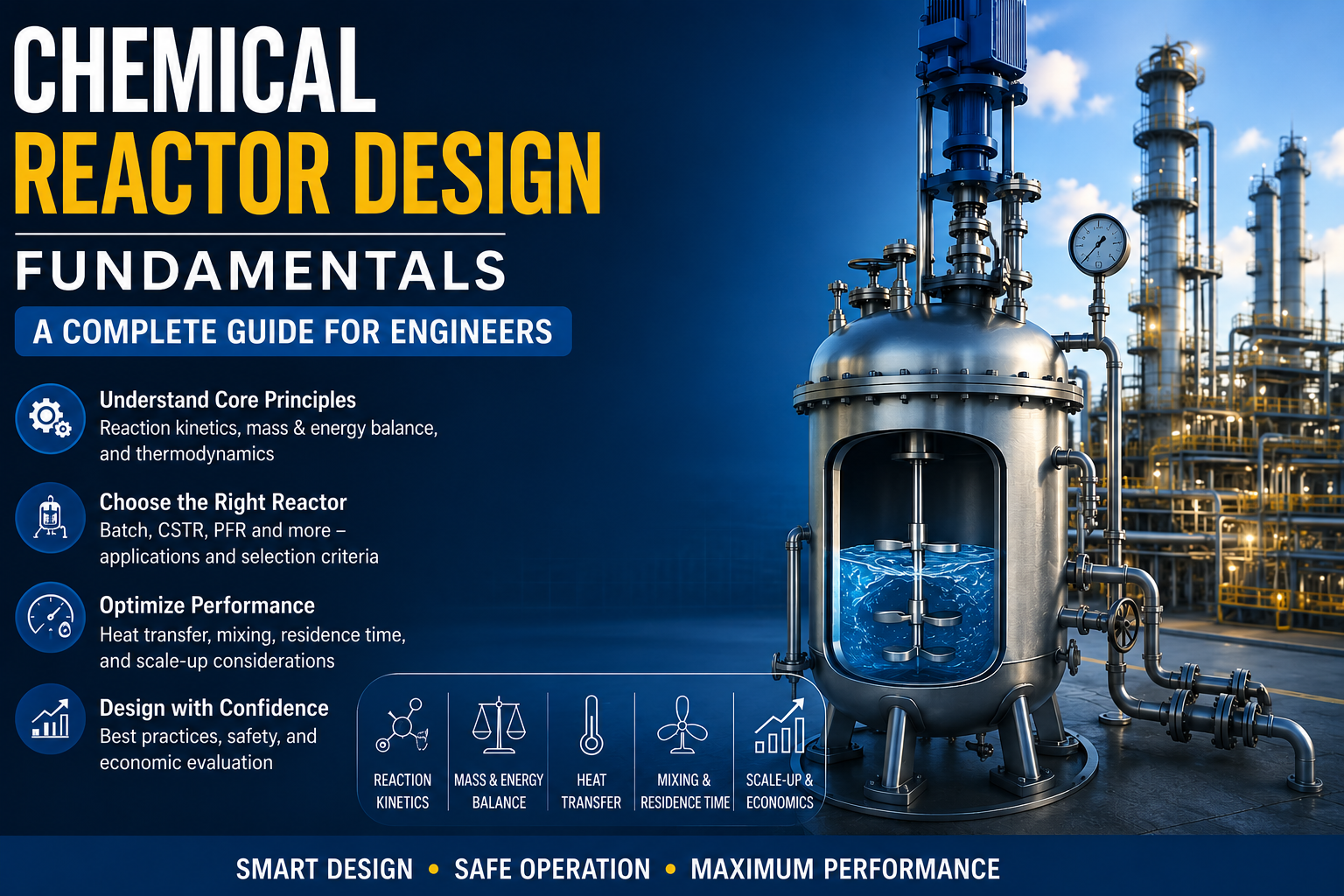
The design of a reactor is dependent upon the type of chemical process that is going to take place within the reactor.
For example, based upon the unique characteristics of a given chemical process, an engineer could decide to utilize one of several types of reactors including but not limited to:
Continuous Stirred Tank Reactor (CSTR)
Fixed Bed Reactor
Packed Bed Reactor
Fluidized Bed Reactor
Multitubular Reactor
Moving Bed Reactor
Entrained Bed Reactor
Microchannel Reactor
Specialized Reactor Configuration
The selection of the proper reactor for any particular chemical process is based upon a variety of different considerations. These include but are not limited to: Chemistry and Kinetics of the Chemical Process Activity of the Catalyst Required Heat Removal Pressure Residence Time of the Working Fluid Properties of the Feed Production Goals Unlike previous methods for selecting reactors that relied heavily upon the biases and preferences of the engineers designing them, the new method provides an opportunity to consider all of the above factors.
Advanced Reactor Modeling and Simulation
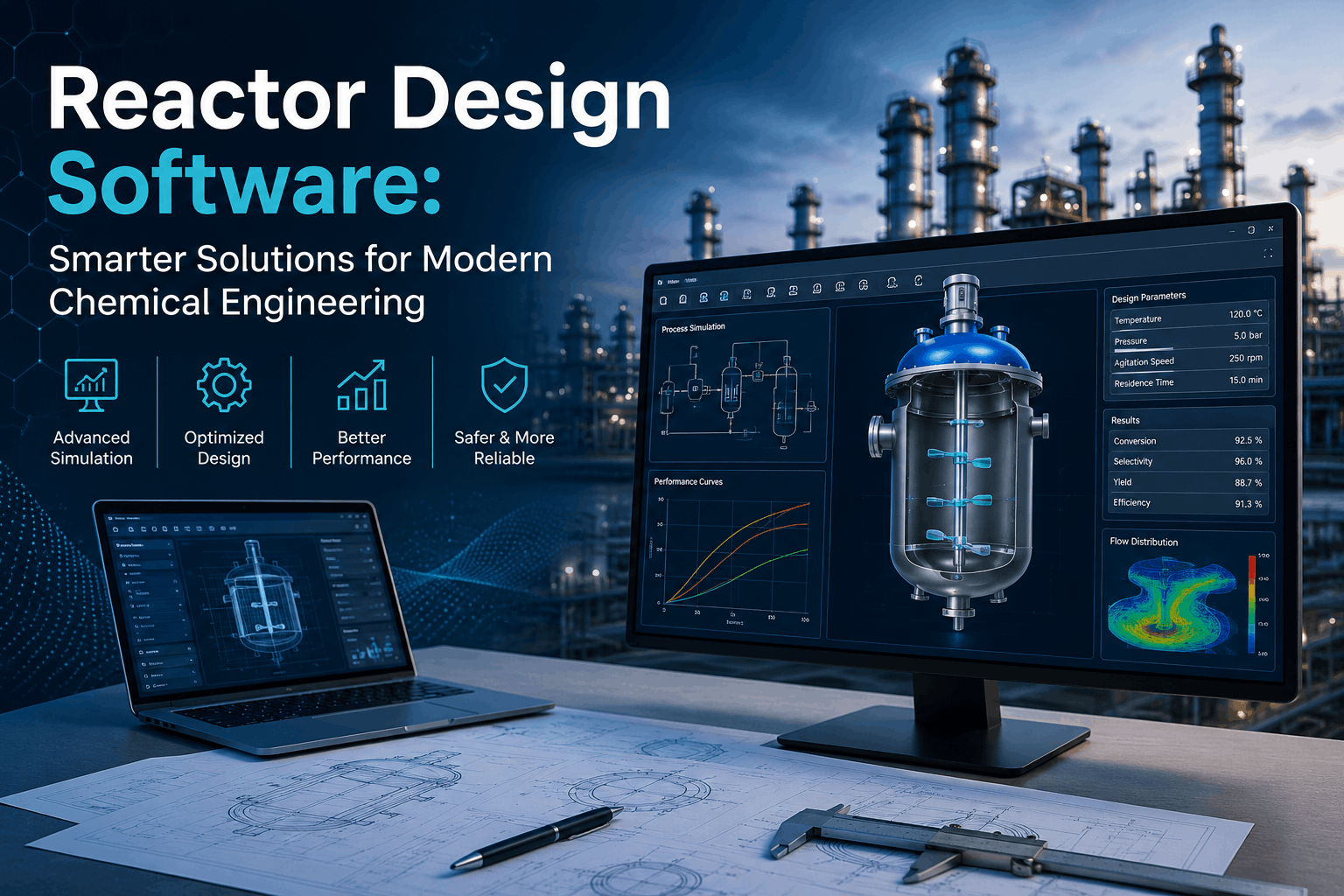
The increasing use of simulation and modeling is one of the most important trends in current day reactor engineering design and construction.
With the ability to model different types of reactors and their operation under varying conditions, an engineer can evaluate the effects of changing design parameters on reactor performance prior to fabricating and constructing a piece of equipment that may ultimately be too expensive to construct.
Simulation of reactor systems allows for prediction of:
• Conversion
• Selectivity
• Temperature profiles
• Pressure drop
• Residence time
• Catalyst utilization
• Heat transfer
• Flow behavior
Additionally, with simulation it is possible to determine what limits exist within a given system and to consider alternative designs.
Integrating Catalyst and Reactor Design
A catalyst and a reactor are typically viewed as two distinct components.
However, they may interact with each other in ways which affect the overall operation of the reactor.
The activity of the catalyst, its physical characteristics (i.e., size and shape of particles), how fast it becomes inactive (deactivated), what type of regeneration is required for it, as well as the reaction rates occurring within the reactor all influence the way the reactor performs.
In terms of developing catalysts and reactors for catalytic processes, we are able to use them both simultaneously to improve upon:
Catalyst Loading
Longevity of Catalyst
Operating Conditions
Reactor Conversion
Selectivity
Regeneration Strategy
This method could prove to be particularly successful when utilizing new catalysts which are not yet established commercially.
Heat and Mass Transfer Matter
Reaction kinetics alone cannot account for the way in which a commercial reactor works. There are many things that could affect how well a reaction proceeds, such as heat and mass transfer. If the reaction is either very hot (endothermic) or very cold (exothermic) then heat and mass transfer can be limiting factors.
In addition, reactions can be limited by diffusion. To optimize their reactors, engineers must consider:
1. Heat generation and removal
2. Temperature gradients
3. Mixing
4. Mass transfer resistances
5. Flow distribution
6. Catalyst efficiency
By controlling these various parameters engineers can improve selectivity and reduce the likelihood of coking catalysts.
From Laboratory Data to Commercial Reactor
One of the most difficult parts of developing a reactor is scaling up the process.
The operating conditions in a laboratory or pilot plant are very different from those in which a full-scale commercial reactor would operate. When reactors become larger, the ways in which fluids flow, how heat transfers through them, how pressure drops in them, and how materials mix within them can all change dramatically as well.
A good method for scaling up a process allows researchers to use lab data (or data from other sources) along with kinetic modeling and reactor simulation to predict how a commercial-scale reactor will perform.
Using a good scale-up methodology, researchers can determine:
What size should the commercial reactor be?
What operating conditions should be used for this reactor?
How much catalyst is needed?
Is it possible to obtain the same level of conversion and selectivity at a commercial scale as was obtained at a lab scale?
What potential problems might occur during the scale-up phase?
Answering these questions can help minimize the risk associated with bringing a new product to market.
Where Can Next-Gen Reactor Design Be Applied?
The Next-Gen Reactor Design will accommodate various chemical/process technology types such as:
Petrochemical Processing,
Specialty Chemicals,
Catalytic Processes,
Hydrogen Production,
Renewable Fuels,
Energy-Related Processes,
Environmental Technologies,
Gas/Solid Reaction Systems and New Chemical Process Technologies.
Additionally, the reactor design can be used with existing reactor technologies or developing process concepts.
Benefits of a Next-Generation Engineering Approach
A well-integrated reactor development strategy can provide several benefits:
Better Process Performance
Engineering Models Assist with Determining the Best Operating Conditions to Maximize Productivity, Selectivity, and Conversion.
Reduced Development Risk
Simulation and Kinetic Modeling Enable Potential Issues to be Identified Prior to Constructing Commercial Reactor Equipment.
Faster Scale-Up
Laboratory and Pilot Data May be Used to Develop Engineering Models Which Will Aid in Developing Commercial Reactor Equipment.
Improved Efficiency
By Developing an Optimal Reactor Condition, Energy Consumption May Be Reduced and Resources Utilized More Efficiently.
Greater Commercial Confidence
A Technically Validated Reactor Design Enhances the Likelihood of Success in both Investment and Commercial Deployment.
The Future of Reactor Engineering
The relationship between engineering and digitalization will have a large influence on the way we design reactors.
Simulation and modeling (kinetic) as well as process optimization and digital data analysis combined with innovative catalysis will provide us with a much better understanding of how our reactor designs are working.
Holistic approaches to reactor design, which combine reaction chemistry, catalysis, reactor engineering, process economics and scale up through an iterative process, will ultimately lead to the best results.
Conclusion
Next Generation Reactor Designs are based on advanced reactor design. This type of reactor design uses reaction engineering principles; knowledge of catalysis; reactor modeling; simulation; and analysis of heat and mass transfer as well as scale-up considerations to develop efficient, reliable, scalable, and commercially feasible reactor designs.
For organizations developing new chemical technologies or improving existing processes, the right reactor design can make the difference between a promising laboratory result and a successful commercial process.
Frequently Asked Questions
What is Next-Gen Reactor Design?
Next-generation Reactor Design (NRD) is a methodology for engineering advanced reactors using reaction kinetics, modeling/simulation, catalyst integration, optimization of processes and scale-up to create cost effective and viable commercial reactor systems..
How does Next-Gen Reactor Design improve reactor performance?
The NRD methodology evaluates all parameters including but not limited to reaction kinetics, reactor geometry, catalyst performance characteristics, mass/heat transfer and operating parameters in order to optimize conversion/selectivity/productivity/energy efficiency/process reliability.
What types of reactors can be developed using Next-Gen Reactor Design?
A wide variety of reactor types are able to utilize the NRD methodology including; continuously stirred tank reactors (CSTR), fixed-bed reactors, packed-bed reactors, fluidized-bed reactors, multi-tubular reactors, moving-bed reactors, entrained-bed reactors, microchannel reactors and specialized reactor systems
How does Next-Gen Reactor Design support scale-up?
An example of how the NRD methodology would be utilized would involve utilizing kinetic models, experimental data, reactor models and process simulations to forecast commercial scale reactor performance and identify potential scale-up issues prior to implementing the design at a larger scale.
Who can benefit from Next-Gen Reactor Design?
Organizations that could greatly benefit from using a holistic reactor design methodology include process engineers, catalyst developers, technology providers, engineering/procurement/construction (EPC) companies, researchers, chemical manufacturers and organizations creating new chemical processes.