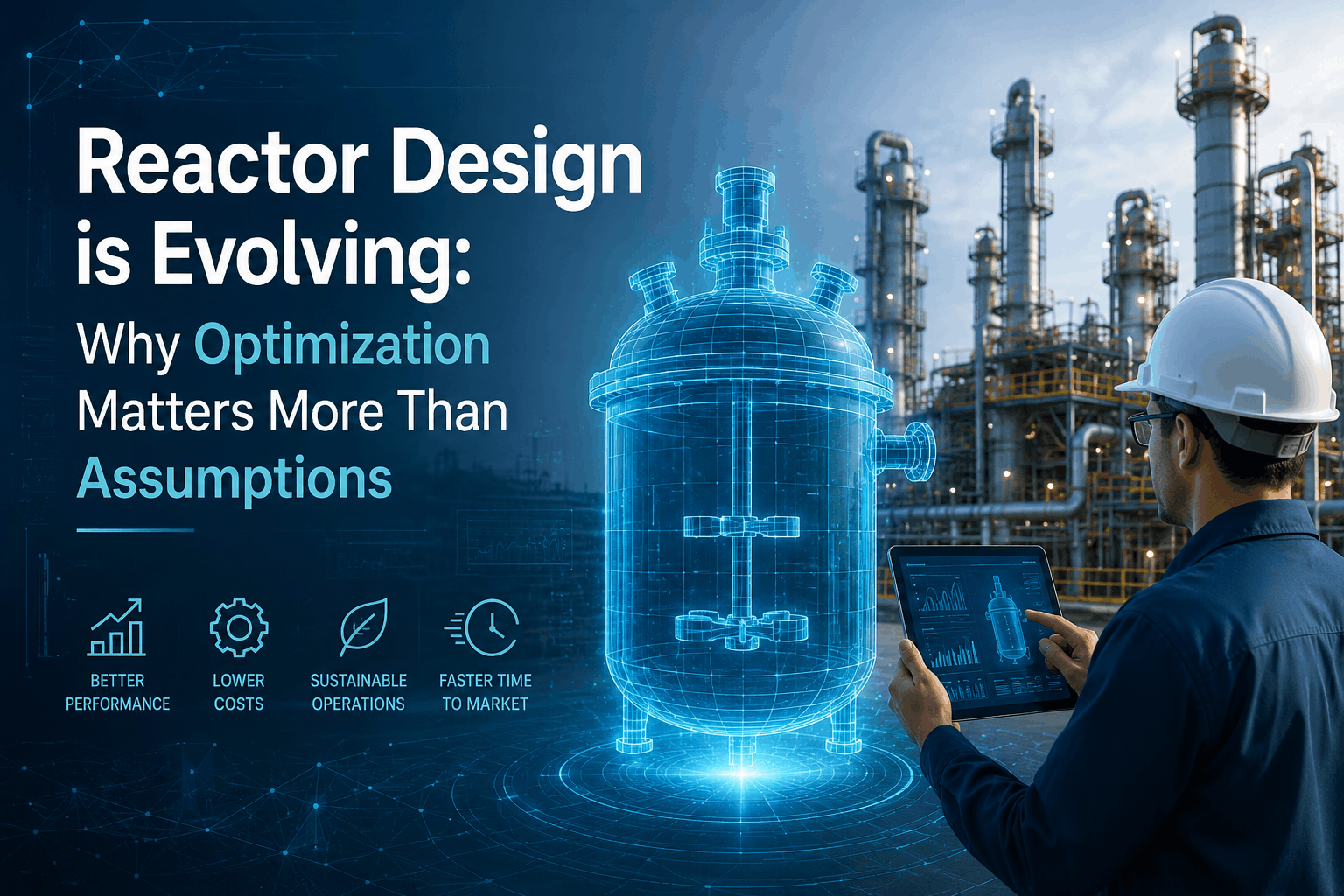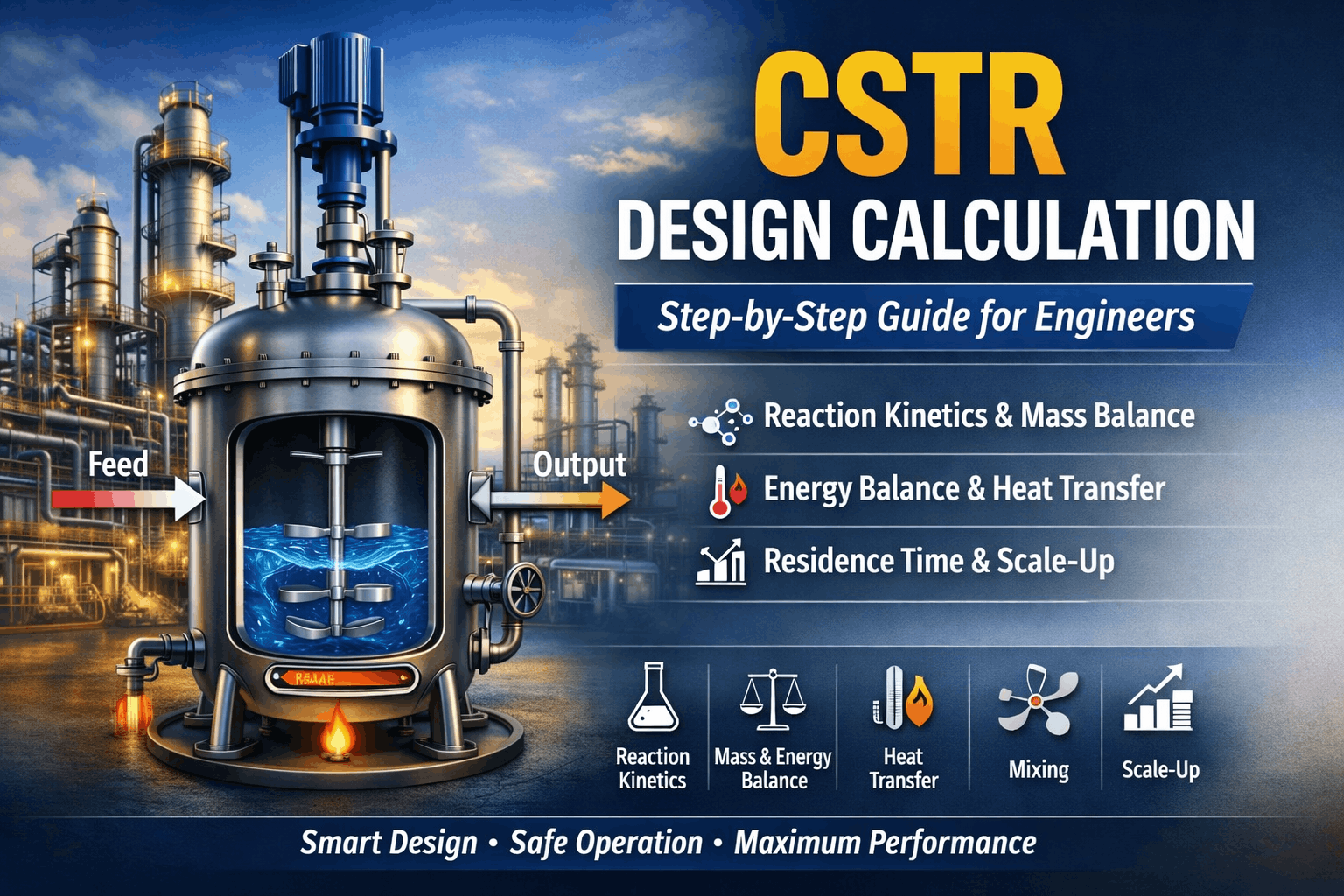
In today’s competitive industrial landscape, process engineering plays a vital role in improving productivity, reducing operational costs, enhancing safety, and achieving sustainable manufacturing. Industries such as chemicals, pharmaceuticals, petrochemicals, specialty chemicals, and advanced materials continuously seek innovative ways to improve their production processes. However, traditional process development often involves extensive calculations, repeated simulations, manual analysis, and time-consuming experimentation.
The Innovative Process Engineering offers a new opportunity due to the combination of the engineering process, computer technology, and process optimization. The innovative approach helps the practical process engineer to evaluate the current processes, design new reactions processes, compare the options, optimize the process conditions, and design the processes based on the specific requirements of the project.
With cutting-edge tools like DIFREX’s Tech Suite, engineers can easily integrate complex engineering knowledge into digital applications. This makes it simpler for them to handle sophisticated process engineering tasks, whether they’re working on new facilities or updating existing plants.
What Is Innovative Process Engineering?
Innovative Process Engineering is a concept that refers to the application of modern engineering methods and scientific principles in order to create, assess and optimize industrial processes. It can also be defined as the method which is aimed at improving the decision-making process in the sphere of engineering.
Innovative process engineering integrates several important disciplines, such as chemical reaction kinetics, fluid flow, heat transfer, mass transfer, process safety and optimisation, rather than relying only on conventional calculations or isolated simulation studies.
The integrated approach is applied in the course of analyzing the interrelated factors pertaining to the reaction parameters. For instance, the alteration of a single parameter might cause significant impact on the reaction outcome, e.g., the shift in reactor temperature might affect not only the conversion but also selectivity, energy consumption, and safety. Hence, it is justified to state that several factors should be taken into account in the course of choosing the optimal reaction parameters.
By bringing these considerations together, innovative process engineering supports better technical decisions and reduces the uncertainty associated with process development and modification.
Making Advanced Engineering Expertise More Accessible
One of the key challenges in process engineering is that the required expertise is often fractured between different areas of engineering, software tools and individual engineers. With every new project, engineers are forced to re-calculate, model, back-test, and analyze dozens of operating scenarios.
This process can consume significant time and resources, particularly when dealing with complex chemical reactions or tightly constrained operating conditions.
The challenge is addressed by advanced engineering platforms utilizing the requisite knowledge within organized digital workflows. DIFREX’s Tech Suite provides a good example of this technique by integrating fundamental process engineering aspects into instruments used for evaluation and enhancement of chemical reaction systems.
Rather than recreating the entire analytical process for every project, engineers can use established computational capabilities to investigate alternatives, assess operating conditions, and explore potential improvements.
The objective is not to replace engineering judgment. Instead, it is to strengthen that judgment by making sophisticated analytical methods more accessible, consistent, and repeatable.
The Five Stages of Innovative Process Engineering
A systematic engineering workflow can be organized into five essential stages: evaluate, redesign, compare alternatives, optimize, and customize.
1. Evaluate the Existing Reaction System
The first step in engineering is to learn how the current process works. Engineers look at how things are running, how reactions happen, how the reactor is built, what the temperature is, what the pressure is, how heat moves around and how materials move around.
In a plant that is already running this information can show chances to make products make things run better make things safer or make the end product better.
For a project this review helps set up the technical base for picking the right reactor type and setting the first design goals.
A detailed assessment provides the baseline needed to determine which modifications are technically justified and economically attractive.
2. Redesign for Better Performance
Once the existing system has been evaluated, engineers can explore alternative reactor configurations, equipment arrangements, and process conditions.
In this kind of application, you should think about things like using a different type of reactor, finding a better way to remove heat, changing how the mixing works, adjusting the residence time, or trying a different process setup.
When a reaction gives off a lot of heat, it’s good to use a reactor that can keep the temperature steady.
Meanwhile, a process that is mass-transfer limited may benefit from changes to the mixing or flow regimes or to the contact surface between the immiscible phases.
Advanced engineering tools help engineers investigate these possibilities systematically before committing to expensive physical modifications.
3. Compare Multiple Engineering Alternatives
Relying on one simulation or a single performance indicator can cause engineers to miss key trade-offs.
Each alternative brings its own strengths across conversion, selectivity, energy use, equipment cost, and safety.
A side-by-side comparison helps teams weigh those strengths against clear project goals.
One design might deliver higher throughput, and another delivers better temperature control or lower energy demand. Comparing alternatives under equal assumptions points to the better choice.
That kind of analysis matters most during technology selection, conceptual design, feasibility work, and plant upgrades.
4. Optimize Operating Conditions
Optimization involves identifying operating conditions that achieve the best possible balance between process performance and practical constraints.
Important variables may include temperature, pressure, flow rate, residence time, reactant concentration, and heat-transfer conditions.
Depending on the project, the optimization objective can be different. It can be increasing conversion, selectivity, production rate, energy efficiency, or cost-effectiveness.
At the same time, the optimization task should also consider process constraints related to equipment, materials, environment, and safety.
By analyzing the relationships between different variables, engineering can identify the solution subset that can potentially be the most promising.
5. Customize the Reaction System
Each industrial process has its particular requirements. Differences in the properties of the feeds to be processed, the desired products, the auxiliary energies available, the site conditions, the equipment to be used and the applicable regulations mean that a reactor solution is rarely universal and often has to be adapted to the specific needs of each project.
Customization allows engineers to design a reaction system that meets the particular needs of their application.
For a new facility, this may involve developing a reactor concept suited to the intended production capacity and process chemistry. For an existing plant, it may involve adapting the current equipment to improve performance while minimizing structural changes and capital expenditure.
The ability to customize solutions makes innovative process engineering relevant across a wide range of industrial applications.
Supporting Grassroots Projects, Retrofits, and Revamps
Innovative process engineering offers benefits throughout a plant’s lifecycle.
Grassroots projects: Reactors can be assessed and evaluated for design parameters, technologies, and alternatives at an early stage and allow engineers to identify promising concepts during early development and reduce design uncertainty to help capital planning.
Retrofit projects: Upgrades or modifications to existing equipment can be evaluated to determine their potential to improve performance, address operational limitations, or adapt the installation to new processing requirements. Engineers can explore options and evaluate potential changes while taking into account installation constraints.
Revamp projects: Plants that want to increase their capacity, improve their efficiency or product quality can benefit from an engineering assessment to identify areas that could be upgraded. By identifying possible alternatives, engineers can reduce the risk of investing in modifications that will not yield the expected improvements.
In all three situations, a structured digital workflow helps engineers make decisions based on technical evidence rather than relying solely on trial and error.
The Role of DIFREX’s Tech Suite
DIFREX’s Tech Suite reflects the principle that advanced engineering expertise should be accessible through practical, integrated tools.
By providing a holistic view that considers reaction kinetics, hydrodynamics, heat and mass transfer, safety constraints, and optimization, an engineering platform offers to support the analysis of reaction systems in detail.
This approach is relevant because a reactor’s performance is determined by multiple factors, and an optimized choice on one front (e.g., ideal kinetics) may be undermined by poor performance on another front (e.g., inadequate heat removal).
By embedding this multi-parameter consideration in day-to-day engineering analyses, the platform will help standardize the decision-making process, promote faster assessment of alternatives, and enable engineers to concentrate on higher-value issues.
The reliability of any resulting recommendation still depends on the quality of the input data, the validity of the underlying models, appropriate validation, and professional engineering review.
Conclusion
Innovative Process Engineering represents a new approach to the analysis, design, and improvement of industrial reaction systems. Through the application of knowledge of the system to be improved and the use of state-of-the-art digital tools, it allows engineers to navigate through the critical phases of the project, including analysis, redesign, comparison, optimization, and customization.
For grassroots plants, this approach supports better-informed design decisions. For existing facilities, it creates opportunities to improve performance through targeted retrofits and revamps.
The central principle is simple: engineering innovation becomes more accessible when expertise is embedded in tools that practicing engineers can use routinely.
Through platforms such as DIFREX’s Tech Suite, process engineers can apply integrated engineering knowledge to explore alternatives, evaluate trade-offs, and develop reaction-system solutions that align with technical, operational, economic, and safety requirements.
Ultimately, innovative process engineering is not just about new software. It’s about new capabilities–practical, repeatable, implementable capabilities–anywhere that a better process decision can create industrial value.