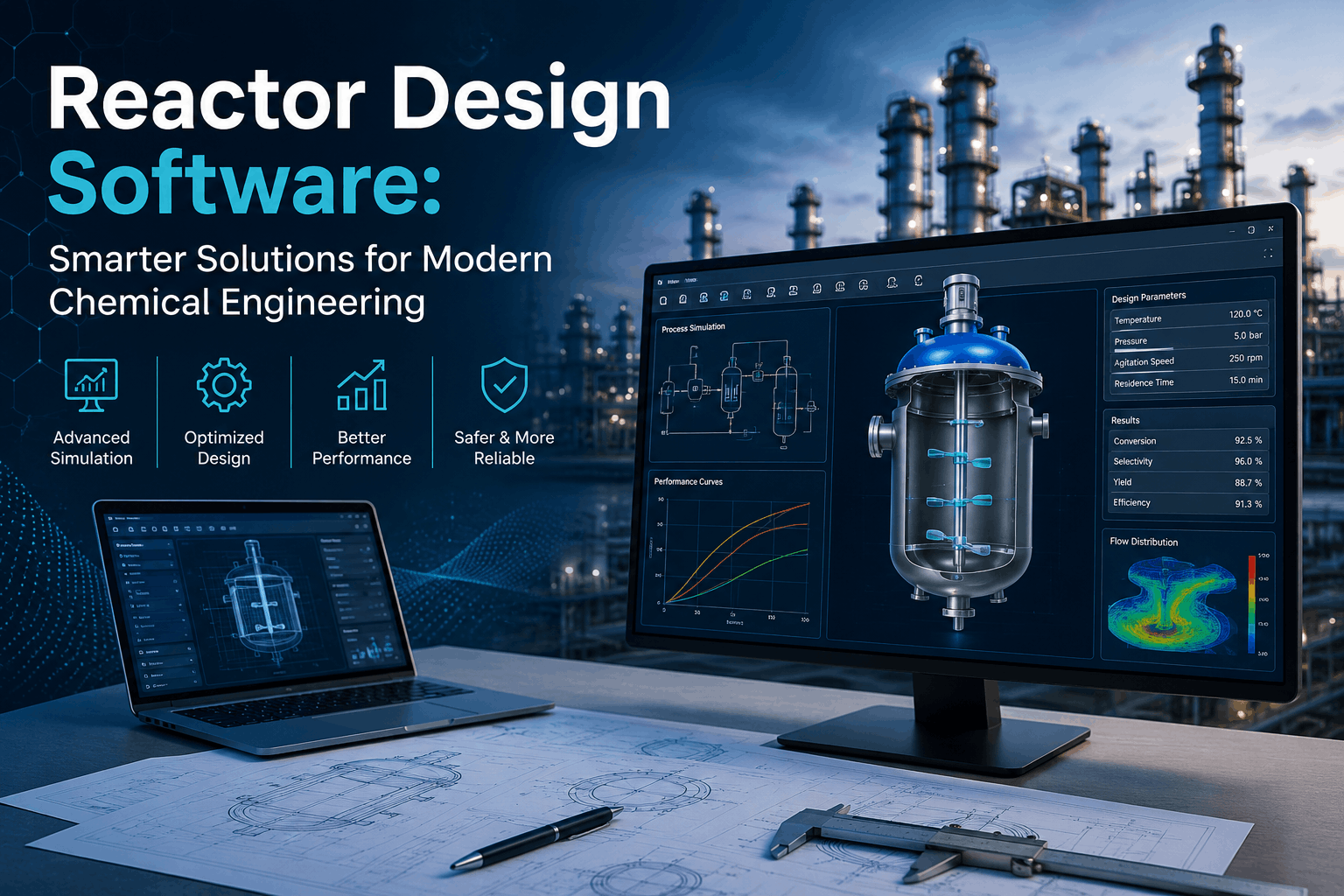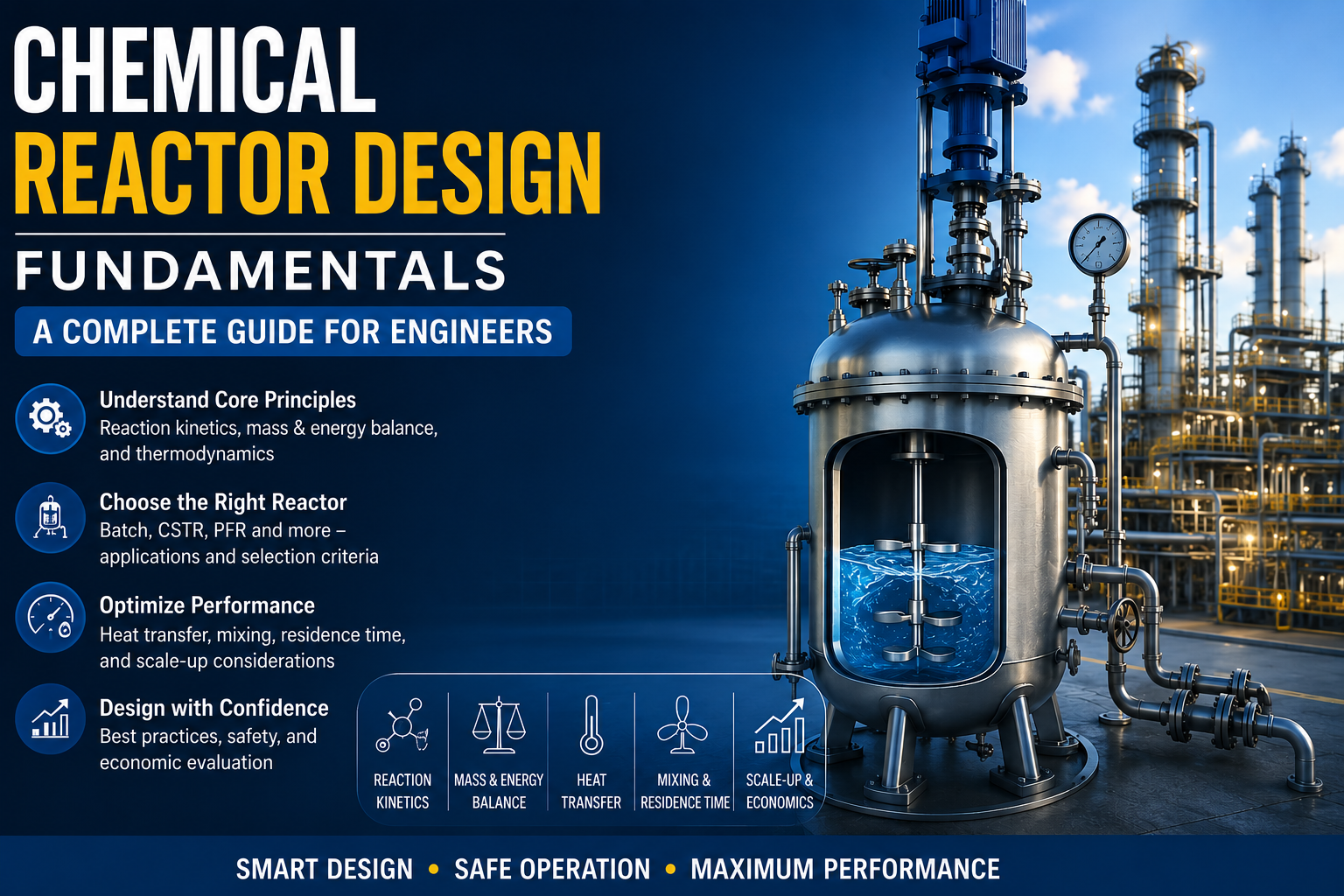
Reactor design is a major factor in the production of chemicals; petroleum products; energy; and many other industrial uses. The appropriate design for a reactor can help to ensure high quality products, increased process efficiencies, and continued safe and reliable operations.
However, achieving the best reactor performance requires more than selecting a reactor type or determining its size. Engineers must understand reaction kinetics, fluid flow, heat transfer, mass transfer, and operating conditions to develop a reliable design.
At DIFREX, reactor design follows a systematic approach that moves from fundamental engineering principles to an optimized and customized solution. The 5D Reactor Design approach — Build the Base, Design Alternatives, Optimize, Customize, and Deliver — provides a structured pathway toward better reactor performance and more confident engineering decisions.
1. Build the Base: Develop Robust Reactor Models
The initial phase of designing a chemical reactor is to develop a solid technical base. Developing accurate kinetic and hydrodynamic models of the reactor based upon basic engineering principles will provide this technical base; however, it must be validated with appropriate experimental and/or operational results.
Engineers can use kinetic studies to determine the speed of a chemical reaction under various operating conditions and what effect those conditions have on the reaction rate. Engineers may also be able to use hydrodynamic models to explain fluid movement, mixing, and how gases, liquids, and solids interact within a system.
Heat and mass transfer must also be considered because they can significantly affect reactor performance.
An accurate reactor model combines all of these elements to estimate how a reactor could behave in various environments. The validation process will help build trust in the model and reduce the number of unknowns when scaling up or designing a new process.
Key objective: Build a reliable foundation for reactor analysis, design, and optimization.
2. Design Alternatives: Explore Different Reactor Configurations
Once the fundamental model is established, the next step is to evaluate alternative reactor designs and operating configurations.
There are many types of reactors which will result in varying outcomes for the same chemical reactions depending upon the type of process. As such, an engineer evaluating a process will consider fixed bed reactors, fluid-bed reactors, continuously stirred tank reactors (CSTR), etc.
Engineers can use the evaluation to assess the pros and cons of all possible designs before deciding on one. This assessment can help engineers decide which type of design is best for their application based upon a number of factors such as how much space they have available for equipment; what kind of catalyst they want to use; at what temperature their process will operate;
what kind of pressure the reactor needs to withstand; what type of feed material they are using; whether or not they want to recycle some portion of their product back into the reactor; and whether or not they would prefer to divide the operation into multiple stages.
Instead of relying on a single concept, this step encourages a structured comparison based on predicted performance, technical feasibility, safety, and cost.
Key objective: Identify promising reactor configurations before making major design or investment decisions.
3. Optimize: Find the Best Performance
After evaluating alternative configurations, the next step is optimization.
Optimization of a reactor is the selection of the most effective set of design parameters and/or operating conditions to achieve the desired process objectives. The process objectives can be, among others, to increase conversion rate; to increase the amount of produced product; to increase selectivity for certain products; to regulate reactor temperature; to decrease power usage and/or to decrease operating costs.
: A chemical reaction (in this case, in a reactor) with a high degree of success (high conversion) can also create unneeded byproducts. Engineers have the ability to determine which combinations of temperature and other operating parameters will result in the most favorable trade off among conversion, selectivity, and energy efficiency.
Model-based simulations help compare different scenarios and understand the impact of individual variables before making changes to the actual process.
Optimization must also account for operational constraints, equipment limitations, and safety requirements.
Key objective: Achieve the best practical balance between reactor performance, operating efficiency, cost, and safety.
4. Customize: Adapt the Design to Specific Requirements
Industrial processes have different needs based upon their feed compositions; catalyst properties; production rates; equipment availability; and plant operating conditions.
Therefore, a standardized reactor design will not necessarily be the best option.
Customization adapts the selected reactor configuration and operating strategy to the specific needs of the project. It may involve modifying reactor dimensions, adjusting operating conditions, evaluating different catalyst or material options, or addressing limitations in an existing reactor.
This methodology may be used in plant operations to provide assistance for troubleshooting, debottlenecking (revamping) and/or improving plant performance as well as responding to changes in production requirements and/or feed conditions.
Key objective: Make the reactor design relevant to the project’s technical, operational, and commercial requirements.
5. Deliver: Provide the Best Practical Solution
The last phase of this process is to transform the results from engineering analysis and optimization into a workable reactor design solution.
Depending on the project, further activities may include experimental validation, pilot-scale testing, scale-up assessment, detailed engineering, and the development of safe operating and control procedures.
Final Design Evaluation: The performance targets for the product will need to be evaluated based on the final design. The technical feasibility of the product must also be evaluated. Safety and economic requirements for the product must also be evaluated. If there is any question about the validity of the final design, additional evaluation may be needed prior to large scale commercial production. Structured Delivery Process:
Having a well-defined structured delivery process will allow all stakeholders involved in developing this product to have better decision-making capabilities. This process also provides a more clear pathway from developing the first idea or concept for a product to actually producing it commercially.
Key objective: Deliver a technically sound, application-specific solution with a clear path toward implementation.
Conclusion: From Fundamentals to Optimized Reactor Design
The 5D Reactor Design Process is an all-encompassing method for connecting basic engineering with the use of alternative design evaluations, optimizing designs, custom-designing, and delivering the finished product.
Engineers will be able to make better design choices and reduce unnecessary risks by developing accurate kinetic/hydrodynamic models, evaluating multiple reactor designs, and determining their effectiveness at varying operating points.
DIFREX focuses on reactor modeling, process engineering, simulation, design, and optimization to support new reactor development as well as the improvement of existing systems.
The goal is straightforward: move beyond trial-and-error design toward a systematic, model-based approach that helps identify the most suitable reactor solution for each application.