Designing a chemical reactor is a crucial step in growing an efficient, secure, and dependable chemical manner. Whether you’re developing a new manner, scaling up a laboratory response, or improving an present commercial plant, selecting the proper reactor layout associate can drastically impact your assignment’s fulfillment.
But how do you locate the right organization in your reactor layout necessities? The solution relies upon to your response chemistry, running conditions, manufacturing objectives, protection requirements, and the engineering information to be had to help your undertaking.
In this guide, we explain what to search for in a reactor design enterprise, the key elements worried in reactor engineering, and how Difrex can guide reactor-related engineering challenges via modelling, method evaluation, and optimisation, depending on venture scope.
Why Is Chemical Reactor Design Important?
A chemical reactor is where the desired chemical transformation takes place. It plays a role on the reaction performance, product quality, energy consumption, operating stability and process safety.
If a reactor is not “matched” with the chemistry and operating conditions, then the conversion may be poor, other by-products may be formed, the temperature may be hard to control, mixing may be inefficient, or the reactor may not have enough capacity.
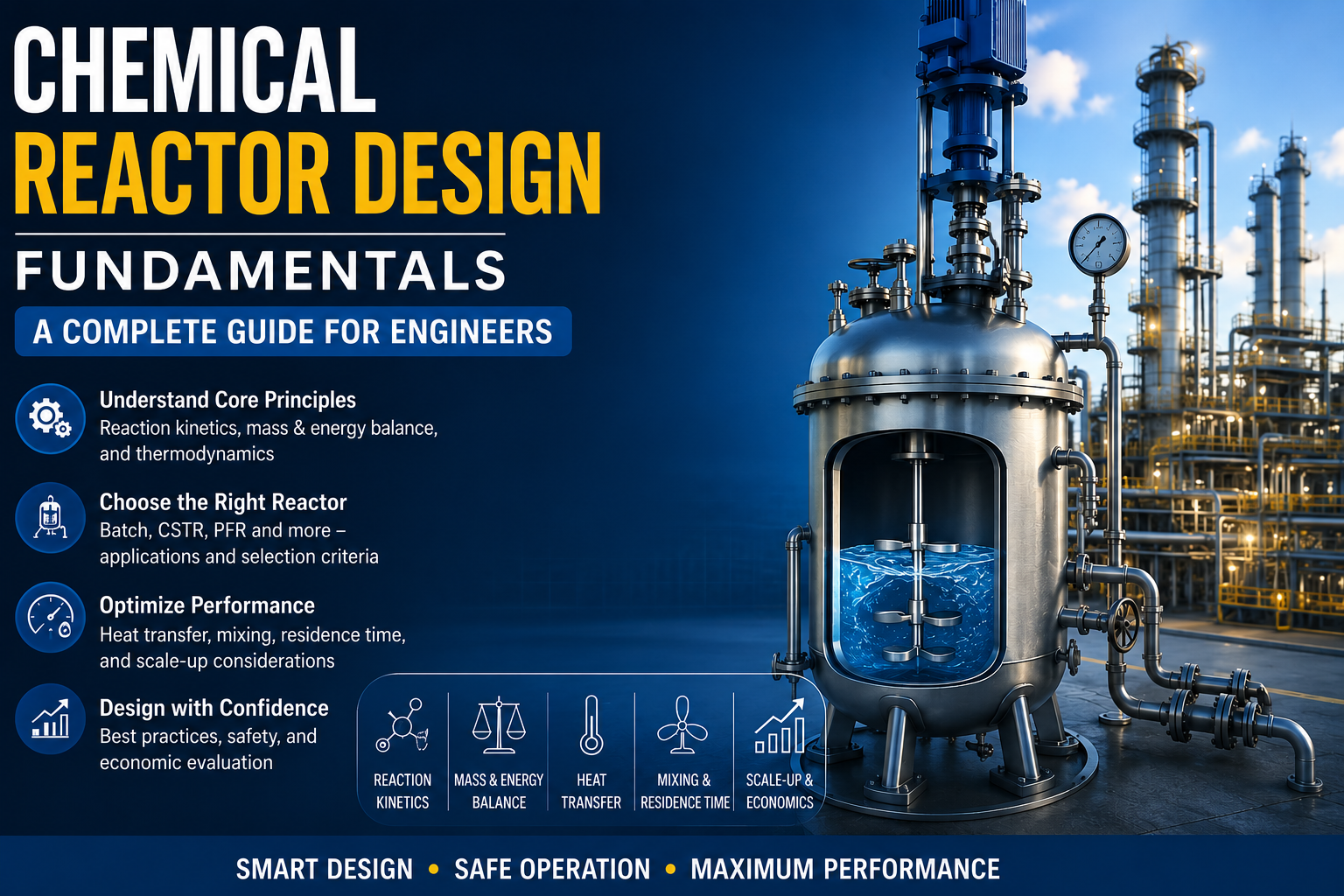
Some aspects of the design of a reactor involve several engineering disciplines, such as:
- Reaction kinetics: Understanding how reaction rates depend on temperature, concentration, pressure, and other relevant conditions.
- Heat transfer: Managing heat generation or absorption to maintain suitable operating conditions.
- Mass transfer: Ensuring that reactants can reach the locations where the reaction occurs at an adequate rate.
- Hydrodynamics and mixing: Understanding fluid movement, residence time, flow distribution, and mixing behaviour.
- Process safety: Identifying hazards and evaluating operating limits, control requirements, and appropriate safeguards.
- Scale-up: Assessing how laboratory or pilot-scale behaviour may change when moving to industrial production.
These factors need to be evaluated together rather than treated as independent design decisions.
What Type of Reactor Do You Need?
The right reactor depends on the reaction mechanism, phase of the reactants, production requirements, and operating conditions. Common reactor types include:
1. Continuous Stirred-Tank Reactor (CSTR)
In a CSTR, the contents of the reactor are mixed by means of agitation (stirring). This type of reactor is most often used in continuous processes where mixing and temperature control are important. Its actual mixing capability depends on the reactor configuration, reaction kinetics, and operating conditions.
2. Plug Flow Reactor (PFR)
A plug flow reactor typically works like a continuous system where fluid flows through the reactor with minimal mixing along the way. As the fluid moves, the reaction conditions can vary throughout its length. This means that the design needs to take into account factors like reaction rates, heat transfer, and how the fluid flows.
3. Batch Reactor
A batch reactor handles a specific amount of material in each production cycle. This setup works well for flexible manufacturing, specialty chemicals, and situations where different formulations or reaction stages are needed. Whether you’re mixing a unique blend or adjusting recipes on the fly, batch reactors can really adapt to what you need.
4. Other Reactor Configurations
Depending on what you need, you might go for a fixed-bed, fluidised-bed, tubular, catalytic, multiphase, or some other unique reactor. It’s really important to base your choice on the specific engineering needs of your project, not just on the type of reactor.
How to Choose the Right Reactor Design Company
Before selecting a company, evaluate its technical capability and the scope of support it can provide.
1. Understand Its Engineering Expertise
Look for experience with reaction kinetics, reactor engineering, and heat and mass transfer. Also look for experience with hydrodynamics and process safety. The exact experience you look for will depend on the reaction you are considering and the industry you are targeting.
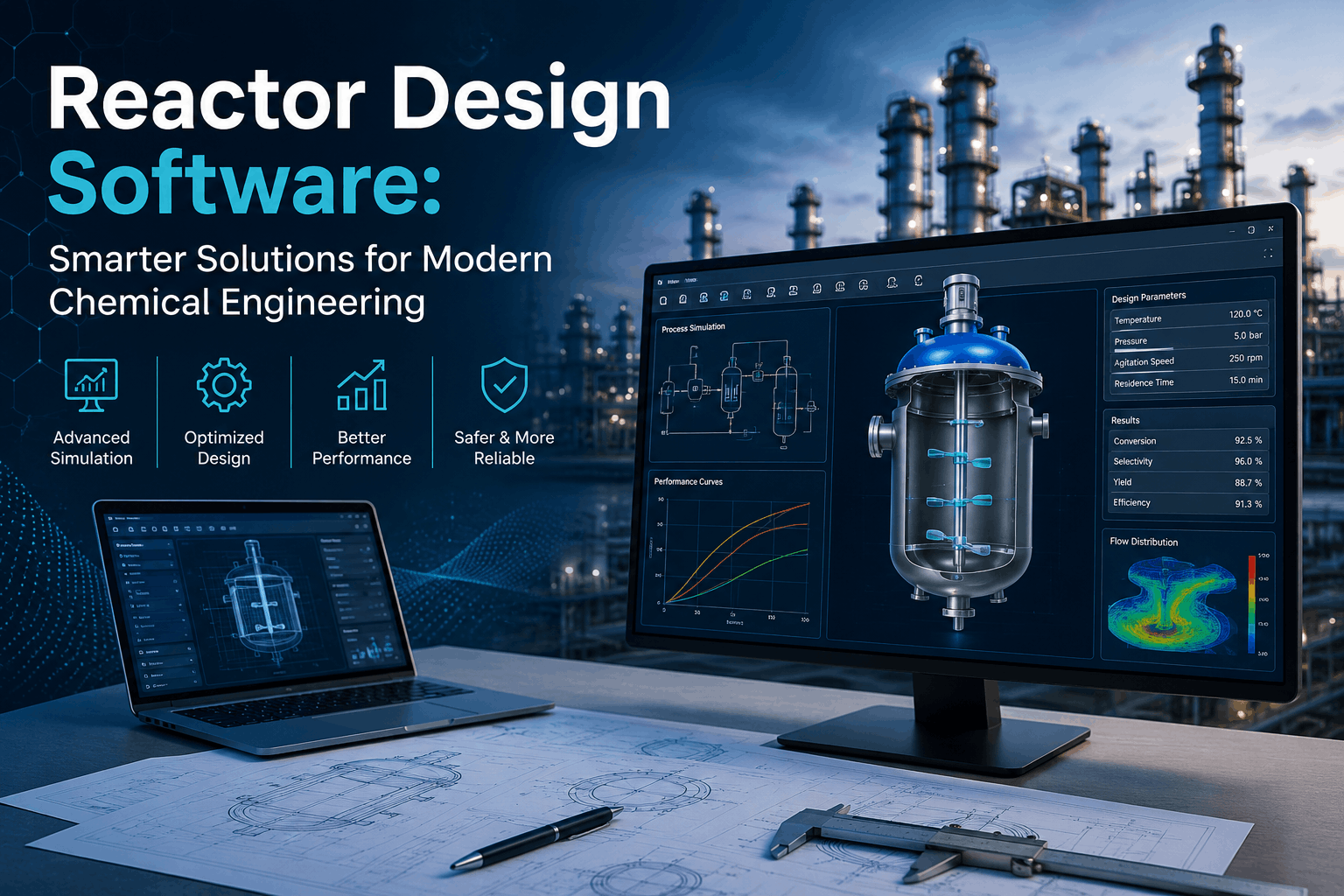
2. Ask About Modelling and Simulation
Modelling and simulation can help engineer evaluate options before making costly changes to design or a plant. The type of analysis included can depend on the project. It can include reaction-rate models, residence-time behavior, heat transfer, flow patterns, and other factors..
Simulation results need to be interpreted with the appropriate assumptions. Wherever possible, results should be validated with experimental data or operating data.
3. Evaluate Scale-Up Capabilities
Results from a process that works in a lab may not be applicable to an industrial process for a number of reasons including heterogeneous or turbulent mixing, heat removal and transfer, and mass transfer. Scale-dependent effects can also affect the performance of the process. It is important to understand how the company approaches these.
4. Confirm Deliverables and Responsibilities
Clarity should be requested on the extent of the company’s engagement. For example, does it provide concept evaluation and calculations, or does it undertake the complete simulation, design, reviews, engineering recommendations, detailed design and drawings, fabrication, and/or implementation? Each of these services should be separately priced and should not be bundled.
5. Review Evidence and Communication
References should be provided on similar projects, qualifications of personnel, technical references, and a clear description of the methodology proposed. If the project is confidential, it may be described in anonymized format. The engineering partner should also define its assumptions and limitations and what data is required for it to proceed.
How Difrex Can Support Reactor Engineering Projects
Difrex provides support in areas related to the engineering of reactors as well as improving the processes used in those reactors. The type of support provided will vary based upon the specific needs of the project and what is needed from Difrex. Support can include evaluating alternative reactor designs, analyzing how a process reacts under various conditions, evaluating multiple design options for a single reactor, or determining ways to increase the efficiency of a reactor that is currently operational.
A structured engineering assessment can take into account the chemical reaction kinetics, fluid flow (hydrodynamics), heat and mass transfer, system limitations, and safety issues of a reactor. The engineer will use this information to determine how well the reactor will operate and what other design or operational issues require additional research.
To begin the first meeting of the project team on a successful note, the project team should come prepared to discuss the existing reaction data, current operating parameters, proposed annual production rate, type of reactor configuration, previously identified operational problems and any other process safety or operational constraints that may exist.
Before any work is started on the project, you need to have a clear understanding of the extent, what will be delivered, and the process for validating that the work has been completed successfully. To determine if the services provided by Difrex are suitable for your project, contact them to discuss your specific needs.
Why Reactor Design Should Be Considered an Integrated Process
Selecting a vessel size or deciding between a CSTR and a PFR are only two aspects of reactor design. Reaction chemistry, transport phenomena, equipment configuration, operating conditions, and safety regulations all interact.
A methodical engineering approach is therefore beneficial. Before making expensive changes, teams can make more informed decisions by documenting assumptions, assessing alternatives early, and comprehending performance constraints.
The first step is to precisely define the engineering problem and determine the data needed to evaluate it, regardless of the goal—a new reactor concept, process scale-up, or enhancement of an existing system.
Frequently Asked Questions (FAQs)
1. Which company can help me design a chemical reactor?
Look a company whose capabilities fit your requirements of reaction chemistry, reactor type, operating conditions, and project stage. Depending on your needs you probably need a reactor manufacturer, an engineering consultancy, a modelling specialist or a team with several of those capabilities. You can contact Difrex to inquire about their reactor-engineering services.
2. What information is required to start a reactor design project?
The following useful starting data could include the reaction scheme, the kinetic information, the reaction and product properties, the operating temperature and pressure, the target throughput, the phase behaviour, the safety regulations and any previous reactor information. Not every project will need all this information at that stage; the engineering team can help determine the essential data gaps.
3. What is the difference between reactor design and reactor simulation?
Reactor design defines and assesses reactor configurations and operating requirements. Reactor simulation uses a mathematical or computational model to estimate process behavior. The model can help design teams make decisions, but ultimately the model’s reliability hinges on the quality of the model, data input, and validation.
4. Can reactor modelling help improve an existing plant?
The model can be used to analyze performance issues and evaluate possible solutions, but ultimately, improvements must be evaluated by operating requirements and real plant conditions. Simulation cannot eliminate uncertainties or guarantees results.
5. Why is scale-up difficult in chemical reactor design?
The size of a vessel increases and this process impacts how fluids blend, how energy moves as heat plus how molecules transfer between phases. It changes the path of fluid movement and the duration that reactants stay in the reactor – those factors are important because they modify how well a reaction proceeds or the extent of the safety buffers. To scale up a process, a designer must do more than enlarge the physical measurements of a small laboratory unit.
6. How do I choose between a CSTR and a PFR?
The selection of a design is dependent on the speed of chemical reactions, the amount of reactant that transforms but also the ratio of desired products. It is also determined by the amount of cooling or heating necessary, the level of agitation required, the loss of pressure and the plan for operation. Engineers are advised to evaluate different options – using data from the specific process as well as mathematical simulations – but they should avoid using broad guidelines that do not apply to every situation.
7. Does reactor design always include equipment manufacturing?
The services from various companies are not identical – some organizations provide mathematical calculations, computer simulations and advice on technical designs. Other businesses build or deliver the hardware components. You should verify the tasks, the duties, the industrial rules and the final results with the company before the work begins.
8. How can I contact Difrex about a reactor engineering project?
To find more information, go to Difrex.com next to use the communication tools to list the steps of your chemical process and the model of your reactor. On the website you can state the goals of your project, the temperature plus pressure during operation and the technical difficulties you face. There is a possibility that Difrex will then explain if the skills of the staff but also the range of their work match what you need.
Conclusion
To pick a good reactor design partner, you should have knowledge on the chemical involved in your process. Also, have clear understanding of the processing objectives as well as what engineering capabilities to look out for. Reactor performance largely hinges on kinetics, heat and mass transfer, hydrodynamics, safety, and scale-up all of which should be handled as part of the overall integrated engineering effort.
If you are considering a new reactor design, you are planning for a scale-up or, you are reviewing existing reactor performance, first of the things to do is to identify the necessary requirements and then thoroughly evaluate the strengths of possible engineering partners.
Browse difrex.com to get more insight and check if they will be a good fit through their discussion of their reactor engineering capabilities.