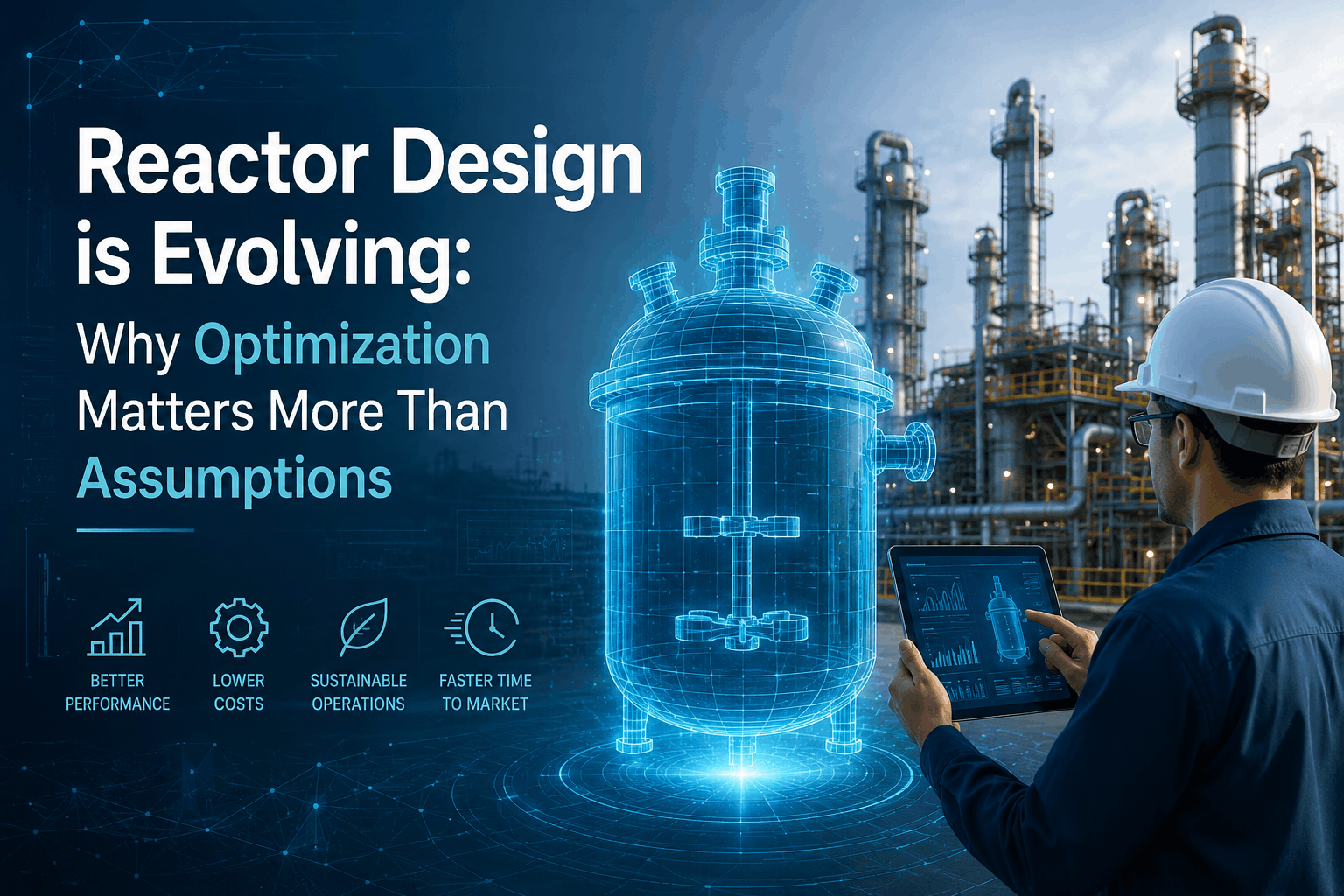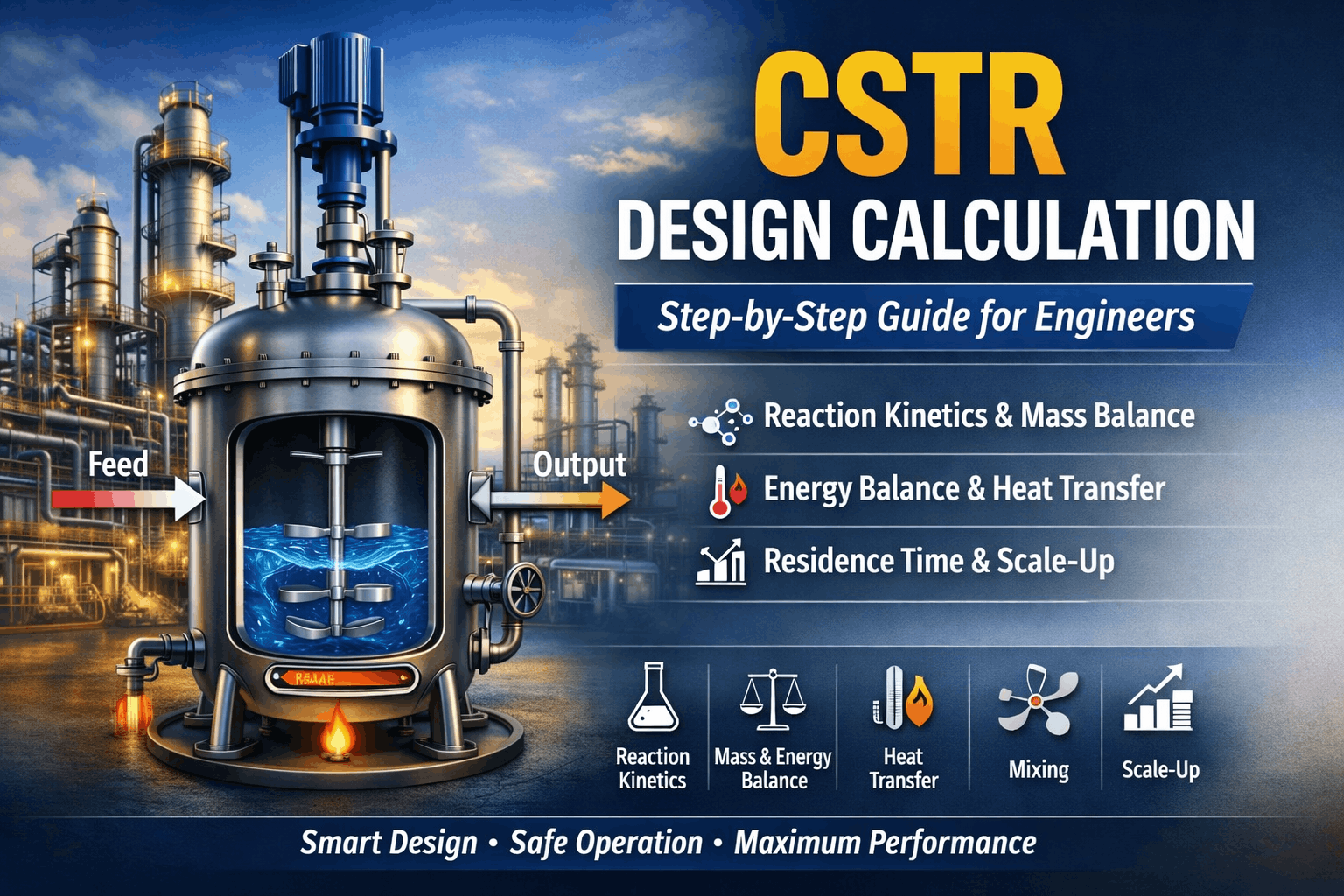
Reactors serve as the central elements in chemical process plants, but reactor design is still a tough challenge for the engineer. To accurately predict the behavior of reactions, to obtain the reaction rate parameters or to consider alternate reactor configurations and optimize the performance, specialized knowledge and considerable engineering work may be necessary.
The concept of DIFREX is to help simplify this process by using an integrated approach to advanced reactor design, reaction engineering, particulate system engineering and optimization. The engineering routines built into its core are created to guide process engineers from basic reaction data to effective and realistic reactor designs with increased efficiency and safety.
The DIFREX Tech Suite provides a systematic approach, through automatic parameter determination, alternative reactor modules and integrated optimization, to making reactor design more accessible to practicing engineers.
1. Advanced PEST Routine for Automated Kinetic Parameter Determination
When designing reactors, the incorporation of accurate reaction kinetics is essential. However, for complex systems or limited data, determining suitable rate equations and kinetic constants can be difficult.
DIFREX incorporates an advanced, embedded PEST routine to support the prompt determination of reaction rate expressions and kinetic parameters. Supported by a proprietary parameter initialization routine, this approach is designed to streamline the process of estimating parameters from available experimental or process data.
Engineers use parameter estimation to create accurate kinetic models that closely represent how a reaction behaves in real life. These models are essential for running reactor simulations, evaluating designs, and optimizing performance.
By building these functions directly into the engineering workflow, DIFREX eliminates time-consuming and repetitive manual tasks and simplifies complex kinetic analysis for process design engineers.
Reliable results still depend on data quality, model assumptions, parameter identifiability, and appropriate validation.
2. Instant BFB and CFB Modules for Alternative Reactor Designs
Different chemical processes call for unique reactor setups. When choosing the right design, it’s essential to consider factors like fluid flow, how solids behave, residence time, heat transfer, reaction kinetics, and the operating conditions.
DIFREX offers quick-access modules for Bubbling Fluidized Bed (BFB) and Circulating Fluidized Bed (CFB) as flexible reactor design options.
Bubbling Fluidized Bed (BFB) reactors use upward-flowing gas to suspend solid particles, creating a fluid-like bed. They can be suitable for processes requiring effective gas–solid contact and heat transfer.
Circulating Fluidized Bed (CFB) reactors operate with continuous solids circulation and typically involve higher gas velocities. They are useful in applications requiring intensive gas–solid interaction, continuous solids handling, and controlled residence characteristics.
By having both reactor modules available in one integrated design environment, engineers can explore different configurations and assess which one fits their specific process needs best.
This method encourages a more thorough reactor selection process, moving away from just traditional design assumptions or relying on past setups.
3. Integrating Reaction Engineering and Particulate System Engineering
Complex industrial reactors cannot always be designed accurately by considering reaction kinetics alone. Their performance may also depend on particle size, solids circulation, gas–solid interactions, fluid dynamics, heat transfer, and mass transfer.
DIFREX brings together Reaction Engineering (RE) and Particulate System Engineering (PSE) within its reactor design approach.
This integration is relevant for systems where chemical reactions and particulate behavior are strongly coupled. By integrating both fields, engineers can gain more insights into reactors’ performance and operational limits.
One of the important areas for this integration is the fluid catalytic cracking (FCC) reactor system in petroleum refining. FCC processes include complex coupled behavior among catalytic reactions, fluid and solid flow, heat transfer, and particle solids circulation.
Using the integrated RE-PSE framework, engineers can systematically evaluate the coupled behavior among different phenomena mentioned above, to the extent that the models allow and sufficient validating data are available.
DIFREX’s combined engineering expertise is intended to support the analysis and design of such demanding reactor systems.
4. Embedded Optimizer for Improved Reactor Performance
The optimal solution may not always be represented by a reactor design that satisfies fundamental operating requirements. Operating conditions, design parameters, conversion, selectivity, energy consumption, and overall productivity can all be improved.
DIFREX includes an embedded optimizer designed to evaluate design variables against defined performance objectives and constraints.
Depending on the application and model capabilities, optimization studies may investigate:
- Higher conversion and product selectivity
- Improved reactor productivity and throughput
- Lower energy consumption and operating costs
- Better utilization of existing equipment
- Alternative operating conditions and design configurations
- Performance improvements while respecting safety and process constraints
Opportunities that might go unnoticed in traditional designs can be found through systematic optimization. The initial design, process data, optimization goals, and realistic operating constraints all affect how much of an improvement is made.
DIFREX assists engineers in exploring options and making evidence-based engineering decisions by incorporating optimization into the reactor design workflow.
5. The Reactor: No Longer a Black Box
Specialized modeling tools and engineering knowledge are typically required in order to predict the internal behaviour of reactors, yet they are essential to process plant performance.
DIFREX wants to change this by bringing reaction kinetics, reactor modeling, alternative configurations and optimization into a more user-friendly engineering arena.
By modelling-based approach, instead of treating reactor as a black box engineers can investigate through a series of studies the influence of operating conditions and design parameters on performance.
Via this approach a better understanding, more informed decision making and more systematic evaluation of reactor design alternatives can be supported.
6. Making Advanced Reactor Design Accessible to Process Engineers
Advanced reactor engineering has long taken a very technical knowledge and a lot of modeling work to achieve that. In fact, DIFREX was designed to address these constraints utilizing the incorporation of critical engineering rules into a structured workflow.
Process engineers and other technical professionals could utilise these skills to investigate reactor behavior, see solutions in designing for modification, or find optimization solutions, without any programming, or even constructing it in-house.
Even though expertise may still need to be taken for applications which can include complex settings, model reconditioning, and safety-critical scenarios, embedded engineering tools might make building up an efficient, sophisticated reactor design easier to manage.
Conclusion
DIFREX brings together automated kinetic parameter estimation, BFB and CFB reactor modules, integrated Reaction Engineering and Particulate System Engineering, and embedded optimization in a unified reactor design approach.
These features help engineers move away from traditional reactor design toward more systematic, data-driven and personalized design approaches.
The goal is to provide tools that will let process engineers model and analyze reactors, review alternatives, and ultimately drive more meaningful performance from the process plant. The heart of the process plant, the reactor, is usually a black box.