What Is Integrated Plant-Reactor Optimization?
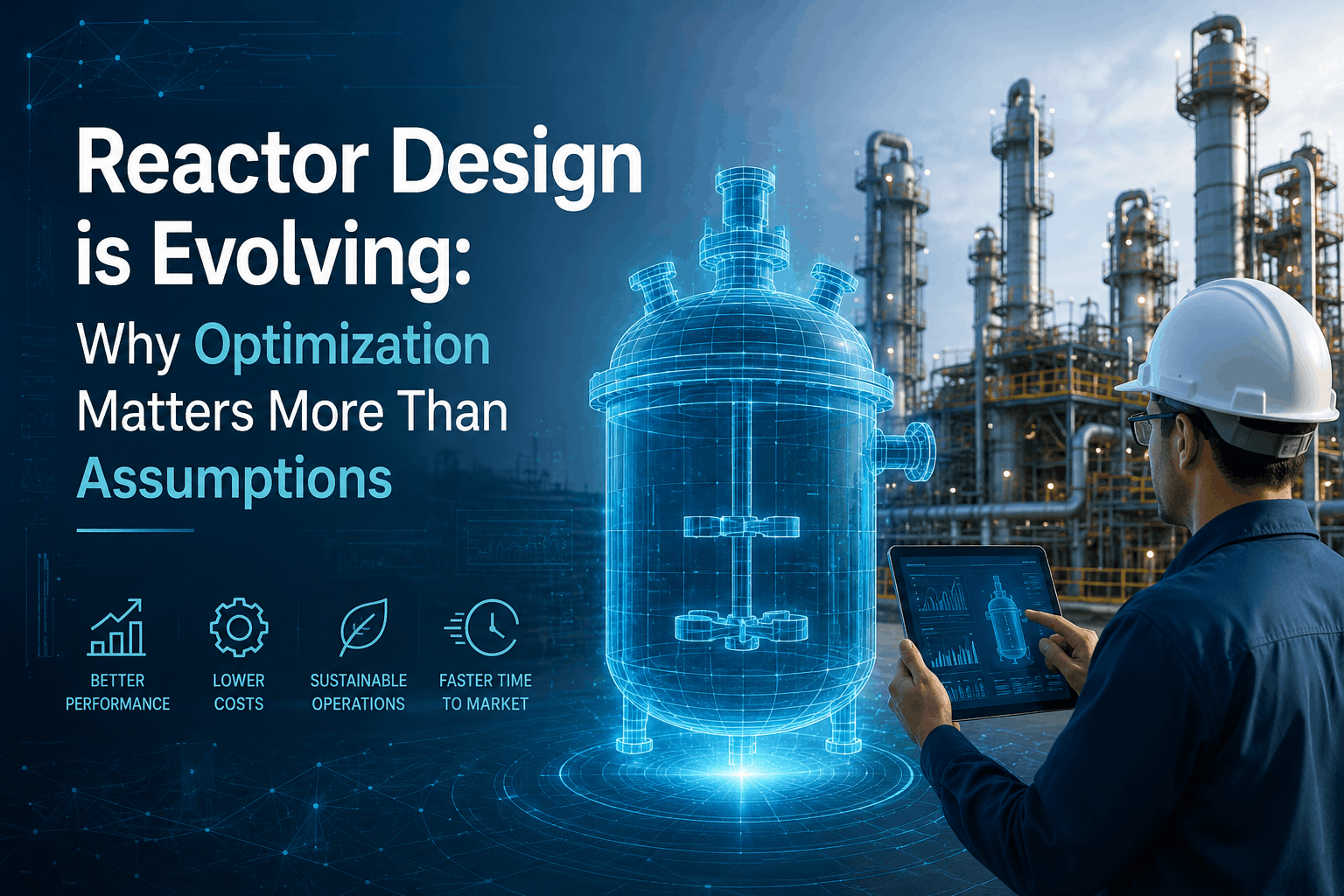
Integrated Plant-Reactor Optimization is an advanced chemical engineering approach to improve overall plant performance by optimizing the reactor in concert with connected process systems, including heat exchangers, separators, recycle loops, compressors, and purification units.
In addition to improving the performance of the reactor itself, an integrated optimization approach provides additional performance advantages over a stand-alone optimization of the reactor.
The integrated approach also takes into account how the reactor affects the processes up- and downstream from it. In short, A superior reactor will not always result in a superior plant.Why Is Integrated Plant-Reactor Optimization Important?
Chemical plants are complex systems where even minor changes within the reactor will have an impact on:
product yield,
energy consumption
separation efficiency
equipment capacity
operating costs
product quality
For example, if there is an increase in the conversion rate of the reactor this may result in a decrease in the recycle required amount of material; thereby reducing the burden placed on the separation process and saving energy. However, optimizing only one aspect of the entire process without considering all aspects could result in negative impacts on other parameters
Therefore, integration of optimization involves analyzing the whole process as a system to consider how each component interacts.
How Does Integrated Plant-Reactor Optimization Work?
The optimization process combines multiple engineering disciplines:
1. Modeling the Reactor and Reaction Kinetics
The starting point for optimizing a reactor is an understanding of how fast each part of the reaction takes place. This includes knowing:
Reaction routes Catalyst efficiency Speed at which products are formed Selectivity – i.e., whether the product or by-product is preferred Deactivation rates of catalysts
Kinetic models can be utilized to determine how well the reactor will perform at various operating points.
2. Simulation and Unit Operations Optimization
A chemical process is composed of multiple unit processes linked to each other.
Process Optimization involves:
Reactors
Distillation columns
Exchangers (heat) Pumps
Compressors Separator units
Recycle systemsAn analysis of this type would identify where inefficiencies exist within the overall process.
3. Heat and Mass Transfer Optimization
Industrial reactors are typically limited by both heat and mass transfers and not by the actual chemical reaction.
The optimization process includes:
Temperature distribution
Quality of mixing
Residence time
Pressure drop
Fluid dynamics
By improving the transport characteristics of a reactor, you can significantly increase the overall efficiency and effectiveness of that reactor.
Advantages of Integrated Plant-Reactor Optimisation
Enhanced Plant Efficiency
Optimising reactor performance with surrounding equipment can help companies achieve greater productivity using existing assets.
Less energy consumption
The integration of reactors with downstream processing units will allow for the minimization of energy requirements for heating, cooling, compression and separation.
Higher Production Capacity
Process bottleneck relief may be achieved through optimisation initiatives which do not necessitate large increases in capacity.
Higher Product Quality
Better operating consistency increases process productivity.
Reduced operating costs
Optimised processes use fewer resources and produce the same or better output.
Digital Engineering for Reactor Design Optimisation
Digital instrumentation is becoming more common in today’s chemical engineering as a way to enhance decision making.
Advanced computer based simulation models combine:
Reaction kinetics
Computational fluid dynamics (CFD)
Thermodynamics
Process simulation
Equipment models
Economic analysis
With these model tools, engineers can evaluate various operating conditions without having to implement them at a real-time basis in their operating plants.
By using this method, engineers will be able to reduce development time, minimize risk and improve investment decisions.
Applications of Integrated Plant-Reactor Optimization
This approach is widely used in:
- Petrochemical plants
- Specialty chemical manufacturing
- Catalytic processes
- Hydrogen production
- Renewable fuels
- Carbon utilization processes
- Pharmaceutical manufacturing
- Polymer production
- Mineral processing
Any industry involving chemical reactions and complex process systems can benefit from integrated optimization.
How Integrated Plant-Reactor Optimization Supports Sustainability
Modern industrial practices have been focused on reducing emissions as well as increasing the efficiency of resources.
The application of integrated optimization techniques to assist in achieving sustainability objectives include: –
Reducing the amount of energy consumed during processing.
Utilizing raw materials at higher levels of efficiency.
Minimizing the amount of waste generated.
Improving process efficiency.
Assisting in the development of low carbon technologies.
In addition, an increase in process efficiency will result in both environmental and economic benefits.
Future of Integrated Plant-Reactor Optimization
The future of Chemical Process Engineering is dependent upon:
Artificial Intelligence (AI)
Machine Learning Models
Digital Twins
Automated Optimization
Predictive Process Analytics
AI based optimization systems will enable engineers to quickly determine optimal operating conditions and provide real-time decision-making support.
Conclusion
Also, while optimizing all equipment in a system, integrated optimization considers how the reactor affects other equipment as well as energy considerations and economic factors.
Therefore, it is clear that optimizing a plant and its reactors is much more than simply optimizing one piece of equipment.
Integrated plant-reactor optimization has many benefits including increasing efficiency, lowering operating cost, improving economic performance, and contributing to environmental sustainability.
Frequently Asked Questions
What is Integrated Plant-Reactor Optimization?
Integrated Plant-Reactor Optimization is a method of improving the operation of a reactor and considering how this improvement affects other parts of the plant.
How is integrated optimization different from reactor optimization?
In contrast, Conventional Reactor Optimization considers only the parameters associated with the reactor that is being optimized.
What industries use Integrated Plant-Reactor Optimization?
Integrated optimization methods are used in many industries including petrochemicals, specialty chemicals, hydrogen, renewable resources, pharmaceutical manufacturing and catalytic processes.
Can existing chemical plants benefit from integrated optimization?
Yes. Upgrading existing facilities can increase production capacity, reduce energy use, and eliminate bottlenecks through process optimization and/or intensification without replacing the entire facility.