
...environment/ CO2/ PTF, energy, coal/ biomass, catalysts, chemicals, petrochemicals, minerals
...environment/ CO2/ PTF, energy, coal/ biomass, catalysts, chemicals, petrochemicals, minerals
Monetizing new idea often kicks off with a new catalyst and/or new chemistry of a
quantum improvement potential - for a catalytic process. Conceptual reactor design needs to start at
this point too – simultaneously. It may be too late if an alternate reactor and/or catalyst is
found far superior later. Case in point is the assumption that a current or conventional
reactor type, say a multi-tubular fixed bed, a circulating fluid bed (like in FCC) or a slurry
reactor (as in hydro-treating) is the best choice for your next venture. Now with the capability of
prompt evaluation of alternate reactor concepts the catalyst development and testing campaigns can
and should be directed to suit the preferred reactor type – say to develop a (powdered) fluidized
bed catalyst instead of a (granular, extruded or spherical) fixed bed catalyst.
Difrex can help you in this effort.
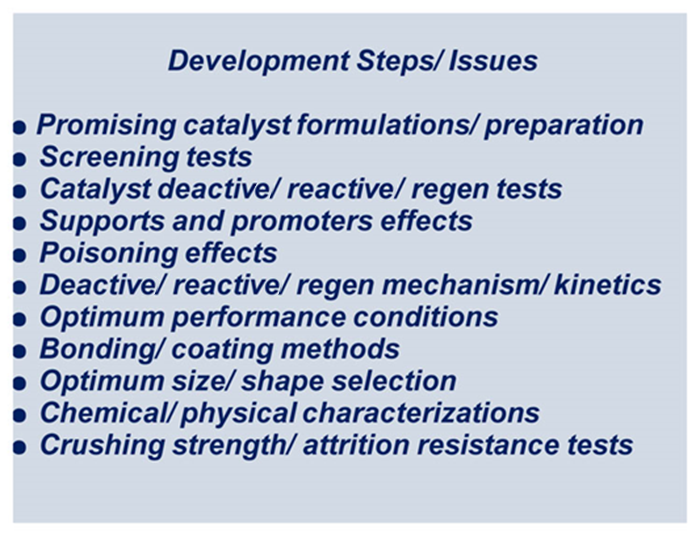
Difrex can also help to promptly develop both the catalyst of choice
(COC) and the process by utilizing standardized procedures and both reaction mechanism/kinetics and reactor model developments
simultaneously that are also necessary for proper catalyst screening and selection process.
Also see ‘Bench/ pilot plant campaign’.
CRI (Catalyst-Reactor Integrated) Process Development optimizes the catalyst and reactor together to achieve higher conversion, better selectivity, improved efficiency, and smoother commercial scale-up.
Developing the catalyst and reactor as one integrated system reduces development time, minimizes scale-up risks, and improves overall process performance.
CRI Process Development optimizes reaction kinetics, catalyst behavior, reactor configuration, and operating conditions together for reliable and efficient reactor operation.
CRI Process Development is ideal for catalyst developers, process engineers, technology licensors, EPC companies, and organizations developing new chemical processes.
Yes. By integrating catalyst development with reactor design from the beginning, CRI Process Development improves process reliability and reduces technical risks before commercial deployment.