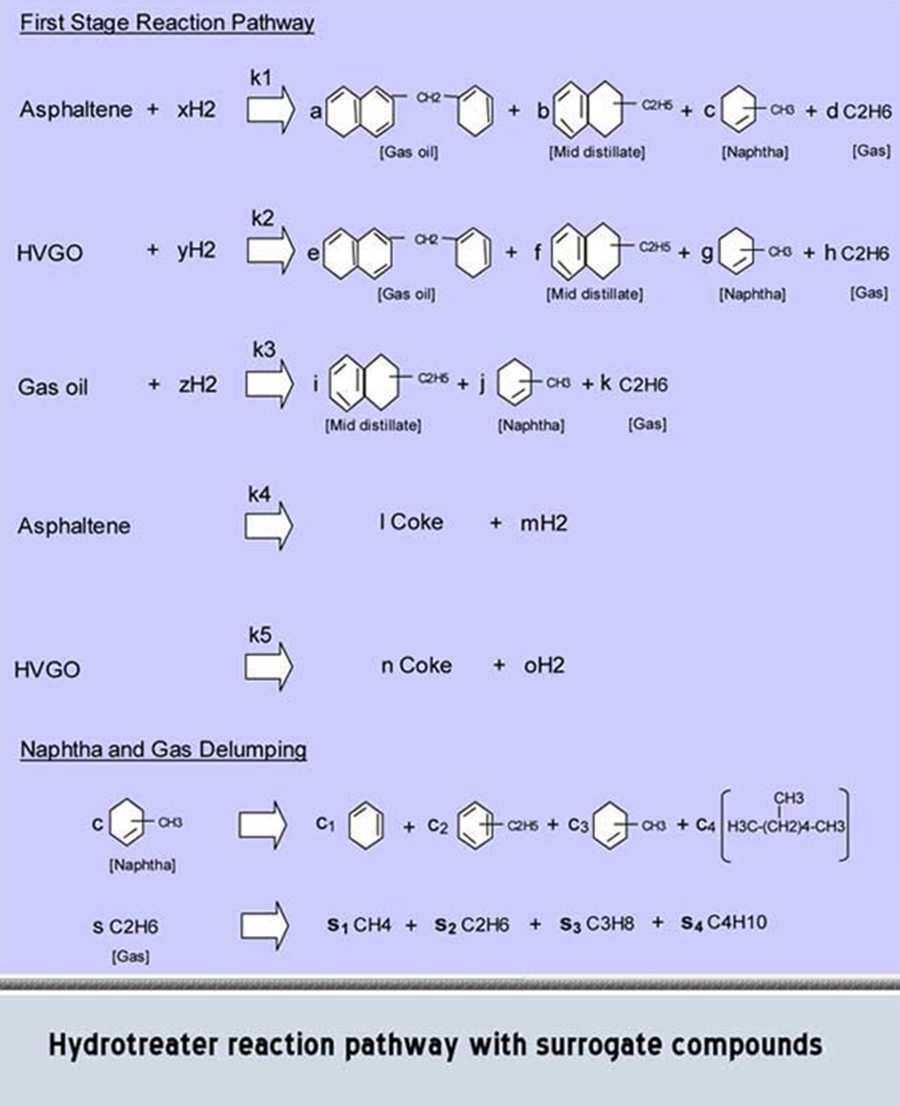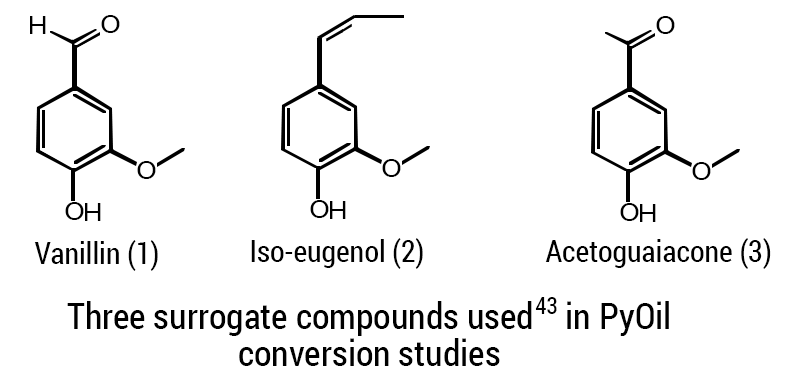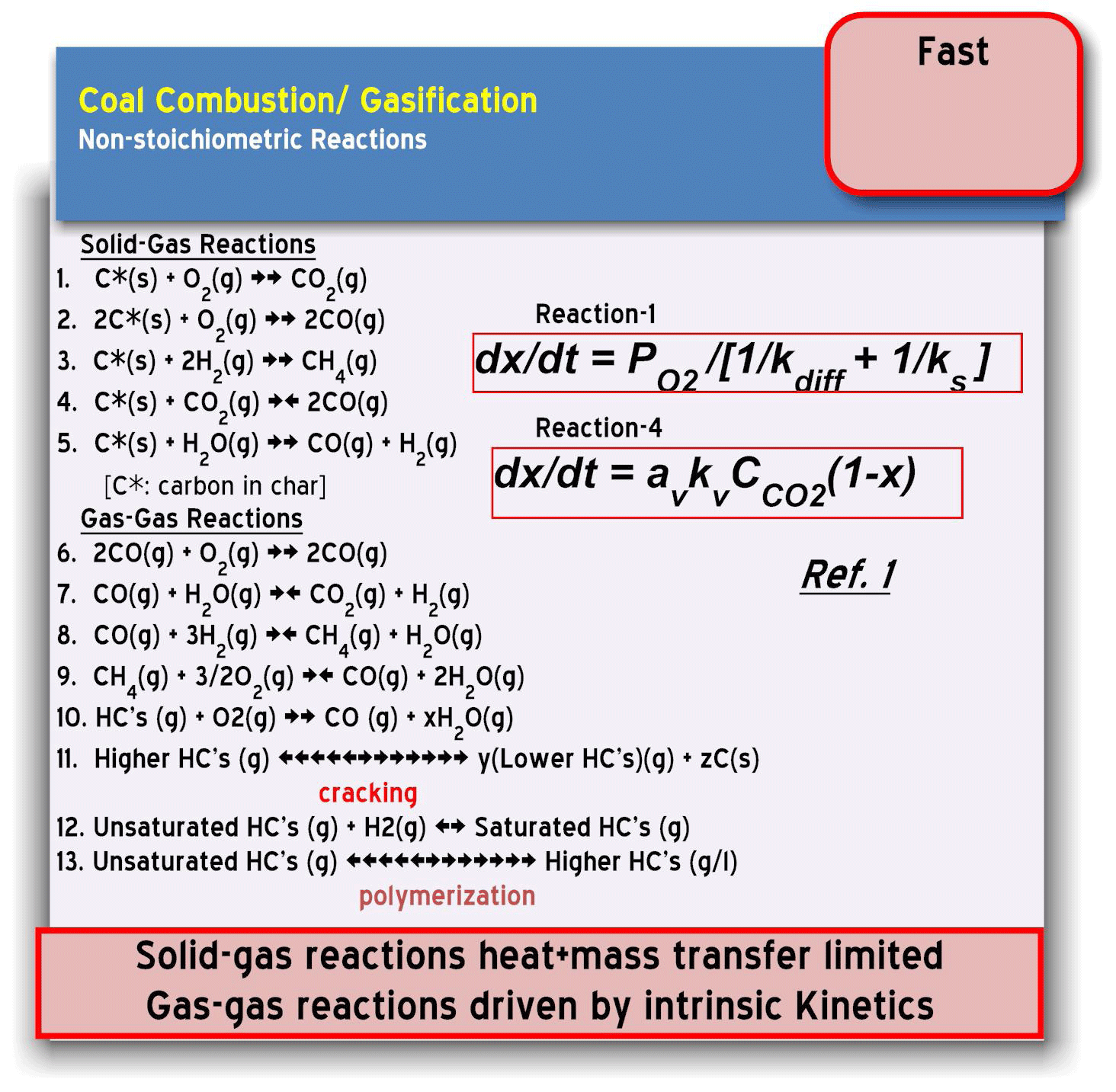
For petroleum, coal and biomass refining/ conversions
Surrogate compounds must be used for difficult-to-characterize (termed non-stoichiometric here)
feed or reactants of petroleum, coal and biomass conversion processes. The smart-pack built-in
data bases of both reaction mechanisms/ chemistries and Thermophysical properties include an
extensive list of these compounds for prompt data analysis, development and designs of these
processes.
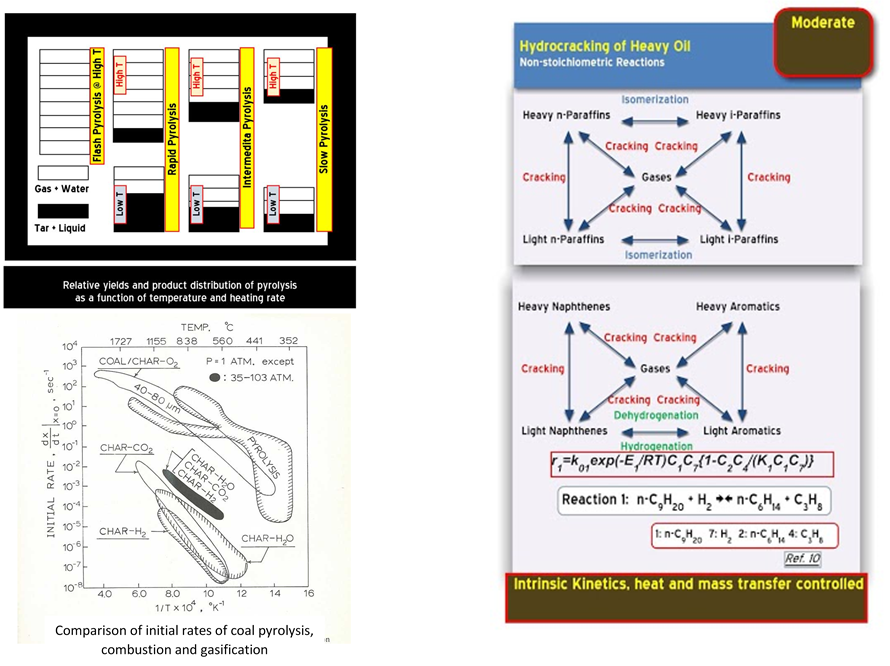
Pyrolysis of coal and biomass
- The complex mechanism and kinetics of pyrolysis of coal of different ranks from anthracite
to bituminous to lignite, has been studied at length and documented by a Difrex team member in a
book chapter
on the subject.
- Clear guidelines to account for the phenomena of vitrification,
flash, rapid, intermediate and slow
pyrolysis
of coal that lead to distinctly different gas to liquid product ratio is provided. These
guidelines and principles can be very helpful in biomass conversion process development and
designs.
|
Reaction system: FCC 5-Lump reactions with Gas oil
feed
___________________________________________________
GASOIL <----> 2.125 gasoline
Rxn 1
GASOIL <----> 8.50 DRYGAS
Rxn 2
GASOIL <----> 4.1026 LPG
Rxn 3
GASOIL <----> 19.8851 COKE
Rxn 4
gasoline <----> 4.000 DRYGAS
Rxn 5
gasoline <----> 1.9306 LPG
Rxn 6
gasoline <----> 9.3426 COKE
Rxn 7
LPG <----> 2.0718 DRYGAS
Rxn 8
|
Performance simulation of an FCC reactor for Gas oil conversion has been
successfully carried out using surrogate compounds for Gasoil, gasoline, dry gas, LPG and coke
Successful applications of fundamental principles of reaction engineering,
instead of pure empiricism, to typical petroleum, coal and biomass conversion processes
have been demonstrated